
How to Get Rid of Pimple : The Best Acne Treatments in Chennai
 By Dr Vatsan v
Acne can be managed by controlling active breakouts, identifying what is triggering them, and preventing new pimples from leaving marks or scars.
The key steps are:
→ Control existing breakouts with treatment suited to your acne type and severity
→ Identify triggers such as excess oil, clogged pores, hormonal changes or unsuitable skincare
→ Avoid picking or squeezing pimples, which can increase the risk of marks and scarring
→ Prevent post-acne marks with appropriate skincare and sun protection
→ Treat persistent acne, marks or scars according to the specific skin concern
The right approach depends on your acne type, severity, skin condition and whether you have active acne, marks or scars. There is no single treatment that works equally well for everyone.
This guide covers acne causes and types, how to manage acne, treatment options, oily skin and acne, acne marks and scars, treatment costs in Chennai, and when to consider professional care.
A dermatologist can identify the type of acne you have and recommend a treatment plan based on your skin and specific concerns.
Medically reviewed by Dr. Vatsan V
MBBS, MD – Dermatology, Venereology & Leprosy
Dermatologist, WEA Clinic, Chennai
Reviewed for acne, acne marks, acne scars and treatment considerations.
What Is Acne?
Acne is a common skin condition that develops when hair follicles become clogged and inflammation occurs. It can appear as blackheads, whiteheads, pimples, pustules, nodules or cysts.
Acne can affect teenagers as well as adults. It may appear on the face, chest, back, shoulders and other areas where oil glands are active.
Because different types of acne behave differently, identifying the type of breakout is an important first step before deciding how it should be treated.
What Causes Acne?
Acne usually develops through a combination of factors rather than one single cause.
Excess Oil and Clogged Pores
Oil, dead skin cells and other material can build up inside hair follicles, contributing to blackheads and whiteheads.
Oily Skin and Acne
Oily skin can contribute to acne because excess sebum can combine with dead skin cells and contribute to clogged pores. When these clogged pores become inflamed, they can develop into pimples and other types of acne.
However, having oily skin does not automatically mean you will develop acne. Genetics, hormones, inflammation, skincare products and other factors can also influence breakouts.
If your skin is both oily and acne-prone, avoid trying to remove all the oil with harsh cleansers or frequent scrubbing. Overly aggressive skincare can irritate the skin and make acne management more difficult. A gentle cleanser, lightweight non-comedogenic moisturiser and appropriate acne treatment can be a better approach.
If oily skin is one of your main concerns, read our guide on how to control oily skin, including its causes, skincare routine and treatment options to learn how to manage excess oil, clogged pores and oily-skin concerns without over-drying your skin.
Inflammation
Some blocked follicles become inflamed, leading to red, swollen or pus-filled pimples.
Hormonal Changes
Changes in hormone levels can increase oil production and contribute to breakouts. This is why acne may appear or worsen during puberty and in some adults.
Genetics
A family history of acne can increase the likelihood of developing persistent or severe breakouts.
Skincare and Cosmetics
Some products may clog pores or irritate acne-prone skin. Choosing products labelled non-comedogenic may help reduce this risk.
Picking and Squeezing
Trying to remove pimples by squeezing, scratching or picking can increase inflammation and raise the risk of scarring.
What Are the Different Types of Acne?
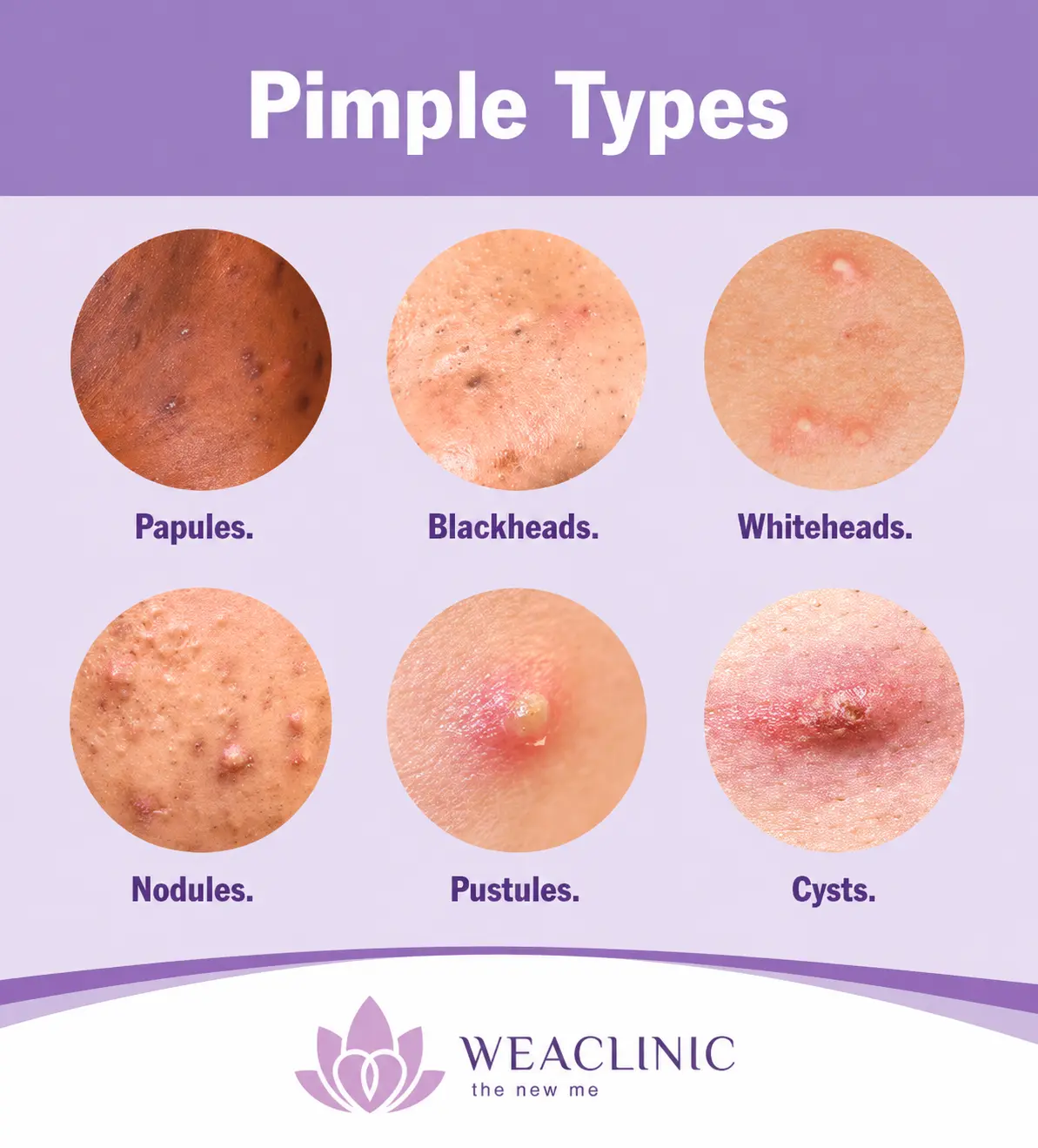
Knowing what your breakout actually looks like can help you understand why one treatment may not work for every type.
Blackheads: Open clogged pores that appear dark at the surface.
Whiteheads: Closed clogged pores that form small white or skin-coloured bumps.
Papules: Small, red, inflamed bumps.
Pustules: Inflamed pimples containing visible pus.
Nodules: Larger, deeper and often painful inflammatory lumps.
Cysts: Deep inflammatory lesions that can be painful and have a greater risk of scarring.
Deep nodules and cysts particularly warrant professional assessment because deeper inflammatory acne has a higher risk of leaving permanent scars.
How to Get Rid of Acne
There is no single acne treatment that works in exactly the same way for everyone. The aim is to clear existing breakouts, reduce new ones and prevent acne from leaving marks or scars.
For mild acne, a consistent routine may include:
- Gentle cleansing rather than aggressive scrubbing
- A suitable acne treatment recommended for your skin
- Non-comedogenic moisturiser
- Daily sun protection
- Avoiding picking or squeezing pimples
- Giving treatment enough time to work instead of changing products repeatedly
Common acne-treatment ingredients include salicylic acid, benzoyl peroxide, retinoids and azelaic acid, but the appropriate choice depends on the type of acne and individual skin needs.
If acne is persistent, painful, widespread or leaving scars, self-treatment may not be enough. A dermatologist can determine whether you have acne or another condition that looks similar and develop an appropriate treatment plan.
Acne Treatment Options
Depending on the condition of your skin, acne treatment may include:
Topical Treatments
Creams, gels or lotions may be used to unclog pores, reduce inflammation and control new breakouts.
Oral Medicines
Moderate-to-severe or persistent acne may require medicines taken under medical supervision.
Chemical Peels
Chemical peels may be used in selected patients as part of an acne or post-acne treatment plan. Learn more about chemical peel treatment.
Light or Laser-Based Treatments
These may be considered for selected patients and are not automatically suitable for every type of acne.
Treatment of Individual Severe Breakouts
A dermatologist may use a procedure such as a corticosteroid injection for selected large, painful inflammatory lesions.
The goal is not simply to make today’s pimples disappear. Long-term acne control matters because repeated inflammation can increase the chance of post-acne marks and scarring. Early treatment can help reduce the risk of acne progressing to deeper breakouts and scarring.
Which Acne Treatment May Be Right for You?
The treatment approach depends on what you are experiencing. Active acne, dark marks and depressed scars are different concerns, so they should not automatically be treated with the same procedure.
| Your main concern | Treatment approach may include | Main goal |
|---|---|---|
| Blackheads or whiteheads | Topical acne treatment and pore-clearing care | Reduce clogged pores and prevent new breakouts |
| Red or inflamed pimples | Acne medication and dermatologist-guided care | Control inflammation and active acne |
| Deep or painful acne | Medical assessment and prescription treatment when appropriate | Control severe acne and reduce scarring risk |
| Dark acne marks | Acne control, sun protection and pigmentation-focused treatment | Reduce post-acne discoloration |
| Uneven or pitted scars | Microneedling, laser, subcision or combination treatment | Improve skin texture and scar appearance |
| Repeated breakouts | Long-term acne management and maintenance care | Prevent new acne, marks and scars |
The appropriate treatment should be determined after assessing the skin rather than choosing a procedure based only on the name of the treatment.
Acne Marks vs Acne Scars: What Is the Difference?
This is one of the most important distinctions when deciding what treatment you need.
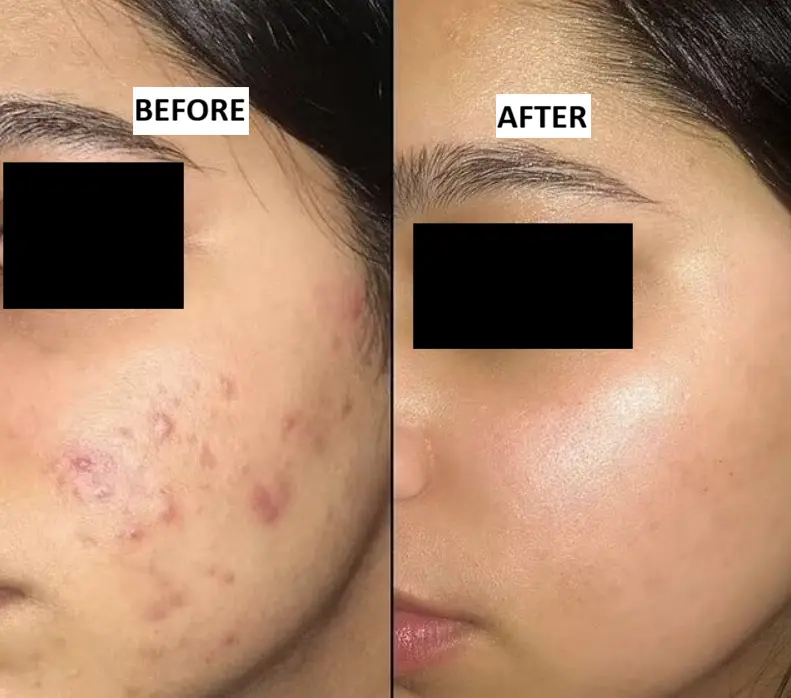
A flat dark, brown, red or pink area left after a pimple may be a post-acne mark rather than a true scar. These colour changes can gradually fade, although some may take considerable time.
An acne scar changes the texture or structure of the skin. It may appear as a depression, pit or raised area.
If the main concern is colour, the treatment approach can differ from someone whose concern is uneven or indented skin texture. Flat dark spots after acne are commonly mistaken for scars, but they are different from structural acne scars.
How to Get Rid of Acne Marks
The first step is to control the acne that is causing new marks.
A dermatologist may consider appropriate skincare, acne medication, sun protection and selected procedures depending on the type of pigmentation and your skin.
Most importantly, avoid picking at active pimples. Increasing inflammation through squeezing or scratching can increase the risk of discoloration and scarring.
If pigmentation remains a concern after your acne is under control, a dermatologist can assess whether you are dealing with post-inflammatory pigmentation or another skin concern and recommend an appropriate approach.
What About Acne Scars?
Acne scars are not all the same. Common depressed scar types include:
- Ice-pick scars – narrow, deeper pits
- Boxcar scars – wider depressions with more defined edges
- Rolling scars – shallow depressions that create an uneven, wave-like texture
There can also be raised acne scars, which require a different treatment approach.
Because these scars differ structurally, the same procedure is not necessarily appropriate for all of them. A dermatologist needs to assess the scar type, skin characteristics and severity before deciding on treatment.
Acne Scar Treatment Options
Once active acne is under control, a dermatologist may consider one or more scar-focused treatments based on the scar type, skin tone, severity and desired outcome.
Options may include:
- Chemical peels
- Microneedling
- Laser-based resurfacing
- Radiofrequency or radiofrequency microneedling
- Subcision for selected depressed scars
- Dermal fillers for certain depressed scars
- Combination treatment
Different scar types can require different techniques, and some patients may benefit from combining treatments rather than relying on a single procedure.
For example, microneedling may be considered for selected acne scars, while subcision can be used for certain depressed scars where tethering contributes to the uneven texture.
If you are specifically looking for acne scar treatment in Chennai, an assessment is important before deciding on a procedure.
If you already have persistent or depressed acne scars, acne scar treatment may be considered based on the type and severity of scarring.
How Long Does Acne Treatment Take?
The time needed to improve acne depends on its severity, how frequently it recurs and the treatment being used.
Mild acne may begin to improve with consistent care over several weeks, while persistent or severe acne can require a longer treatment plan and follow-up.
Acne marks and scars follow a different timeline. Marks may gradually fade with appropriate care, whereas depressed acne scars usually require procedures performed over multiple sessions to improve their appearance.
Rather than changing treatments frequently, it is better to follow a dermatologist-guided plan long enough to assess how your skin is responding.
How Can You Prevent Acne Scars?
You do not have to wait until scars appear before taking acne seriously.
The most useful steps are:
- Treat recurring acne early
- Do not squeeze or pick pimples
- Follow a consistent acne-care routine
- Protect your skin from the sun
- Seek professional help for deep or painful acne
- Continue acne control even when the skin begins to improve
Treating acne early can help reduce the risk of deeper breakouts and subsequent scarring. Picking, popping or scratching breakouts can also increase inflammation and scarring risk.
When Should You See a Dermatologist for Acne?
Consider a dermatology consultation if:
- Acne continues despite a consistent skincare routine
- Pimples are deep, painful or frequently recurring
- Breakouts are leaving dark marks
- You are developing pitted or raised scars
- Acne is affecting your confidence or daily life
- You are unsure whether the problem is actually acne
- You have tried several products without meaningful improvement
A dermatologist can first identify the type of acne and then decide whether medication, skincare, procedures or a combination is appropriate.
If what appears to be acne is actually another skin condition, the treatment may be completely different, which is another reason persistent or unusual breakouts may need professional assessment.
How to Choose Acne Treatment in Chennai
If you are searching for the best acne treatment in Chennai, the right treatment depends on your skin rather than on a single procedure or product.
Before choosing a clinic, consider whether:
- A dermatologist evaluates the type and severity of your acne
- The treatment addresses active acne, not only existing marks or scars
- Your skin type, sensitivity and previous treatments are considered
- The reason for recommending a particular treatment is explained
- The plan includes preventing new breakouts as well as treating existing concerns
- Expected results, treatment duration and possible downtime are discussed
- Acne scars are assessed according to their individual type and depth
A consultation is particularly important if your acne is painful, persistent, recurring or already leaving marks and scars.
How Much Does Acne Treatment Cost in Chennai?
The cost of acne treatment in Chennai varies because acne treatment can mean medical treatment for active breakouts, while acne marks and established scars may require additional procedures.
For active acne, the overall cost can include a dermatologist consultation and prescribed medicines or skincare. Procedure-based treatment is more commonly considered when marks or established acne scars need additional care.
Indicative Cost of Acne and Acne Scar Treatment in Chennai
| Treatment | Indicative Chennai price |
|---|---|
| Dermatologist consultation | ₹400–₹1,500+ |
| Chemical peel | ₹1,500–₹5,300+ per session |
| Microneedling / RF microneedling | ₹2,000–₹20,000 per session |
| Laser-based acne scar treatment | ₹5,000–₹18,000+ per session |
| Subcision | ₹1,500–₹13,000+ per session |
| Dermal fillers for selected scars | ₹5,000–₹35,000+ |
These are indicative published Chennai market ranges, not WEA Clinic’s price list. Actual cost can vary depending on the type and severity of acne or scarring, treatment area, technology used, number of sessions and the dermatologist’s assessment.
For this reason, a consultation is useful before estimating the total cost of an acne treatment plan.
Acne Treatment at WEA Clinic, Chennai
At WEA Clinic, acne concerns are assessed based on the type of acne, severity, skin condition and whether post-acne marks or scars are present.
Dr. Vatsan V, MBBS, MD – Dermatology, Venereology & Leprosy, is a dermatologist at WEA Clinic, Chennai, with clinical experience in dermatology, cosmetic dermatology, dermatosurgery and laser treatments.
The approach is not simply to treat an individual pimple. The focus is on understanding the underlying acne concern, controlling active breakouts and addressing post-acne marks or scarring when required.
Treatment recommendations can therefore differ from one patient to another depending on the condition of the skin and the concern being treated.
Frequently Asked Questions
1. How can I get rid of acne?
The right treatment depends on the type and severity of acne. A consistent skincare routine may help mild acne, while persistent, painful or severe acne may require dermatologist-guided treatment.
2. What is the best acne treatment for acne?
There is no single treatment that is best for everyone. The appropriate approach depends on the type, severity and recurrence of acne and whether marks or scars are already present.
3. What is the cost of acne treatment in Chennai?
The cost varies depending on whether you need medical acne treatment, a procedure for marks or treatment for established acne scars. Consultation fees and procedure costs can differ between clinics and according to the treatment required.
4. Can acne be completely cured?
Acne can often be controlled effectively, but some people are prone to recurring breakouts and may need ongoing maintenance treatment.
5. How can I prevent acne scars?
Treat acne early, avoid picking or squeezing pimples and seek professional treatment if you develop deep or painful acne. These steps can reduce the risk of scarring.
6. Are acne marks and acne scars the same?
No. Acne marks are usually flat changes in skin colour, while acne scars involve a change in skin texture or structure.
7. How long does acne treatment take to work?
Acne treatment is not usually an overnight process. Some people begin to see fewer breakouts after several weeks, while longer-term control may require continued treatment and follow-up.
8. Can acne scars be removed completely?
Treatment can make scars less noticeable and improve skin texture, but complete removal cannot be guaranteed. The outcome depends on scar type, severity, skin characteristics and the treatment plan. Acne scars can be improved, but they do not always disappear completely on their own.
9. Should I treat acne before acne scars?
Usually, yes. Controlling active acne helps reduce new breakouts and new scarring before scar-focused procedures are considered. Active acne is generally addressed before scar-focused treatment begins.
Take the Next Step for Your Skin
If recurring acne, dark marks or acne scars are becoming difficult to manage, the first step is understanding what type of problem you actually have.
A dermatologist can assess your skin and help you choose an appropriate treatment approach rather than relying on trial and error.
Consult Dr. Vatsan V at WEA Clinic, Chennai, for personalised guidance on acne, acne marks and acne scars.

