
Best Hair Transplant Treatment in Chennai: Step-by-Step Guide
 By WEA Clinic
Introduction
Losing hair hits hard—especially when the mirror shows a receding line before 40. You’re not alone; over 60% of Indian men face pattern baldness by 50, and Chennai’s humidity plus stress speeds it up. The fix? Hair transplant surgery. It’s not magic—it’s science moving healthy follicles to thin spots.
In Chennai, clinics like those in Velachery offer world-class options at half global prices—₹40–80 per graft versus ₹200+ abroad. Surgeons here handle 50–60 cases monthly, blending precision tech with natural artistry. This guide walks you through how hair transplant really works, step by step. No fluff, just facts from dermatologists, real patient journeys, and 2025 updates. Ready to understand your options and reclaim your hairline?
How does hair transplant really work?
Hair transplant surgery takes hair you still have—usually from the back and sides of your head—and relocates it to bald or thinning areas. These donor hairs resist DHT (dihydrotestosterone), the hormone causing male pattern baldness, so they keep growing for life once moved.
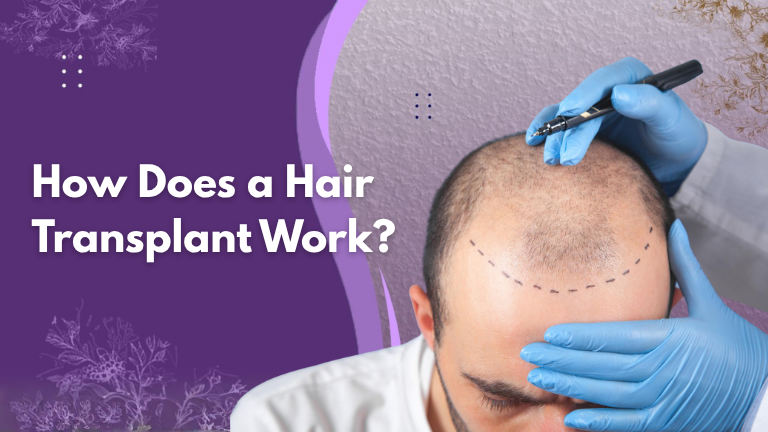
The process starts with a detailed consult. Your surgeon maps your hairline using a digital densitometer, checks donor density (ideally 80–100 follicles per sq cm), and picks a method based on your baldness grade (Norwood scale 3–6 common in Chennai men). On surgery day:
- Pre-op Prep: Blood tests, scalp cleanse, marking the new hairline with your input—lower for youth, higher for maturity.
- Numbing: Local anesthesia with vibration distraction—awake but painless, like a dental procedure.
- Extraction: Follicles removed one by one (FUE) or in a strip (FUT). Modern micro-motors in Chennai use 0.7–0.9 mm punches for minimal trauma.
- Graft Sorting: Techs separate 1-hair, 2-hair, 3-hair units under magnification—crucial for natural density.
- Recipient Site Creation: Tiny slits (0.8 mm) made at 35–45° angles to mimic your original growth pattern.
- Implantation: 2,000–4,000 grafts placed manually or via implanters—precision ensures no “doll hair” look.
In Velachery, many clinics now use robotic assistance for FUE mapping, cutting error by 15%. The art? Matching your swirl pattern so it looks born there, not planted. Post-op, tiny scabs form and fall in 7–10 days; new hair sprouts in 3–4 months. Full density hits at 12–18 months. It’s your hair, just strategically rearranged—like urban planning for your scalp.
How long do hair transplants last?
Forever—if done right. Transplanted follicles are genetically programmed to resist DHT, so they don’t fall out like native ones in the crown or temples. Long-term studies from ISHRS show 90–95% graft survival after 10 years, and Chennai clinics report similar numbers with proper aftercare.
But here’s the catch: untreated native hair keeps thinning due to ongoing DHT attack. That’s why top dermatologists in Tamil Nadu pair transplants with minoxidil 5% or oral finasteride (1 mg daily) for 6–12 months post-op—some extend to 2 years for Norwood 5+ cases.
Timeline breakdown:
- Week 1–2: Shock loss—transplanted and some native hair sheds (normal, not failure).
- Month 3–6: Baby hairs emerge, thin at first, like peach fuzz.
- Month 6–9: Hair thickens, styling possible.
- Month 12–18: Final thickness, texture matches donor area.
Touch-ups? Rare—only if aggressive balding continues. A good hairline transplant in Chennai lasts decades. Just protect from sun—our tropical UV can fade results and damage grafts without SPF 50 hats or scalp sprays. One patient in Velachery, 45, got 3,500 FUE grafts in 2023—still dense in 2025, no meds needed after year one.
Hair transplant side effects
Like any surgery, risks exist—but manageable and rare in certified hands. Common ones resolve fast:
- Swelling: Forehead or eyes puff up day 2–5; cold compresses and head elevation fix it.
- Itching/Crusting: Scabs irritate; medicated shampoo (ketoconazole) soothes.
- Numbness/Tingling: Donor area, fades in 2–8 weeks as nerves regrow.
- Redness: Recipient zone pink for 2–4 weeks—camouflage with loose caps.
Rarer issues (<1%):
- Infection: Prevented with sterile OT, single-use tools, 3-day antibiotics.
- Folliculitis: Inflamed follicles—treated with warm compresses.
- Cysts: Small bumps if grafts buried too deep—drain easily.
Velachery clinics counter with:
- PRP injections during surgery (boosts healing 30%).
- LED light therapy post-op (reduces inflammation).
- 24/7 helpline for concerns.
Biggest myth? “You’ll go fully bald after.” Nope—only transplanted hair sheds temporarily in shock phase; 95% regrow. Side effects peak day 3, resolve by week 2. Follow aftercare religiously: no gym 10 days, no helmets 3 weeks, gentle washes with baby shampoo. Smoke or drink? Delay healing—quit 48 hours pre/post.
Different types of Hair Transplant?
Three main techniques dominate 2025—FUE, FUT, and DHT—plus niche hybrids.
FUE (Follicular Unit Extraction):
- Individual follicles punched out using rotary tools.
- No linear scar—tiny dots fade to invisible in 6 months.
- Shave donor area (or no-shave FUE for discretion).
- 4–8 hours, 2,000–4,000 grafts per session.
- Ideal for short hair, athletes, early balding.
FUT (Follicular Unit Transplantation):
- 1–2 cm wide scalp strip removed from the occipital area.
- Dissected into grafts under a stereo microscope.
- Higher yield in one session (up to 5,000 grafts).
- Linear scar—hidden under top hair, 1 mm thin with trichophytic closure.
- Best for advanced baldness, budget cases.
DHT (Direct Hair Transplant):
- FUE variant—grafts extracted and implanted instantly, no storage in saline.
- Reduces out-of-body time to <2 minutes per graft.
- 95–98% survival rate vs 90% standard FUE.
Hybrids & Add-ons:
- Bio-FUE: PRP or growth factors mixed with grafts.
- Robotic FUE: ARTAS system maps follicles—used in premium Chennai centers.
- Beard/Body Hair Transplant: BHT for low scalp donor—chest or beard hair as backup.
Chennai clinics lean FUE (80% cases) for discreet scarring—perfect for IT professionals and short haircuts. Cost? FUE ₹50–80/graft; FUT ₹35–60; DHT +₹15. Session limits prevent over-harvesting—max 30% donor removal lifetime.
Which is better, FUE or FUT?
No universal winner—depends on your baldness stage, lifestyle, and budget.
Choose FUE if:
- You wear hair <1 cm or buzz cuts.
- Need 2,000–3,500 grafts (hairline + temples).
- Want zero linear scar—dots heal white, blend with skin.
- Okay with longer surgery time (6–8 hrs).
- Active job—no long recovery.
Choose FUT if:
- Advanced baldness (Norwood 5–6, >4,000 grafts needed).
- Budget tighter—₹1.5 lakh vs ₹2.5 lakh for same grafts.
- Donor hair dense and stretchy.
- Don’t mind scar under longer hair (2–3 cm top cover).
In Chennai, FUE dominates for men under 45—gym culture, helmet use, social media selfies. Recovery? Both back to desk work in 7 days. FUE heals faster visually (no stitches); FUT yields more in bald crowns but needs suture removal day 10. Hybrid tip: start FUE for hairline, add FUT later for density if donor allows. One Velachery surgeon combo’d both on a 52-year-old—6,000 grafts total, natural crown swirl.
Which is better, FUE or DHT?
DHT isn’t a separate type—it’s an advanced FUE protocol where grafts are implanted within seconds of extraction.
Standard FUE: Grafts extracted, stored in chilled saline or Hypothermosol, implanted 1–2 hours later.
DHT: Extract-implant cycle <2 minutes—no holding solution needed.
DHT wins because:
- Less graft drying/desiccation (95–98% survival vs 90–92%).
- Faster procedure (30–40% less time—5 hrs vs 8 for 3,000 grafts).
- Natural angles preserved—less manipulation trauma.
- Lower shock loss rate.
Velachery clinics charge ₹10–20 extra per graft for DHT—worth it for >2,500 grafts or weak donor hair. For smaller hairline transplant (1,000–1,500 grafts), standard FUE suffices. Both beat older punch grafts—those 4 mm plugs looked like doll hair. 2025 update: some centers use “preview implanters” letting patients see placement live.
Is hair transplant 100% safe?
No surgery is 100% risk-free, but hair transplants are 99% safe in certified, experienced hands. Complication rates under 1% in Chennai’s top clinics with ISHRS-trained surgeons.
Safety checklist:
- Board-certified plastic surgeon or dermatologist (MCh/DNB).
- OT with HEPA filters, laminar airflow.
- Single-use punches, implanters.
- Pre-op blood tests (CBC, HIV, Hb, clotting).
- Emergency crash cart, pulse oximeter.
Red flags:
- Unreal promises (“100% density in 6 months”).
- Untrained techs doing extraction/implantation (surgeon must do key steps).
- ₹20–30/graft deals—compromised hygiene.
- No before-after gallery or patient testimonials.
Real talk: 1 in 200 get minor infection—treated with oral antibiotics. Shock loss? 80% regrow within 4 months. Necrosis? <0.01% with proper depth. The best hair transplant treatment balances safety, skill, and your goals. Chennai’s edge? 20+ years of volume experience, strict DCGI protocols, affordable follow-ups (free for 1 year in premium packages). One 38-year-old IT pro in Velachery—3,200 FUE grafts, zero complications, back to client calls day 5.
Conclusion
Hair transplant surgery isn’t a quick fix—it’s a strategic, permanent move. You’re redistributing your own DHT-resistant hair to build a natural, lasting hairline that ages with you. FUE for discreet scars and active lives, FUT for max grafts on budget, DHT for speed and survival. Results? 90%+ success in skilled Chennai clinics, with full density in 12–18 months.
Start with a consult—map donor density, set realistic expectations (70–80% original look). Pair with minoxidil/finasteride to protect native hair long-term. In 12 months, you’ll run fingers through thick, confident hair that’s yours, just smarter placed. Baldness ends here—confidence begins. Velachery’s dermatologists make it accessible, safe, and natural. Take the step; your future self (with a full head of hair) will thank you.
FAQs
1. What is the best hair transplant treatment for men in Chennai?
FUE with DHT technique leads for natural results and minimal scarring. Top Velachery clinics deliver 95% graft survival. Cost: ₹50–80/graft. Results show in 8–12 months—perfect for active lifestyles.
2. How much does hair transplant surgery cost in Chennai?
₹40,000–₹2,00,000 based on grafts. 2,000 grafts (hairline) ≈ ₹80,000. Includes anesthesia, OT, and follow-ups. EMI options available. Cheaper than Dubai, same tech.
3. Can I get a hairline transplant without shaving my head?
Yes—no-shave FUE exists. Only donor strips shaved, hidden under top hair. Ideal for professionals. Adds ₹10–15/graft. Recovery same, discretion max.
4. Is hair transplant painful?
Local anesthesia numbs everything—you feel pressure, not pain. Post-op discomfort like mild sunburn, managed with paracetamol. Day 3 is the easiest. Sleep elevated first night.
5. Do hair implants for men look natural?
100%—when angles match your swirl. Chennai surgeons use 0.8 mm punches, mimicking nature. Bad jobs? Old pluggy looks—avoid clinics without before-and-afters.
Also Read: The Main Cause of Male Baldness