
Scalp Fungal Infection: Causes, Symptoms & Medical Treatment
 By WEA Clinic
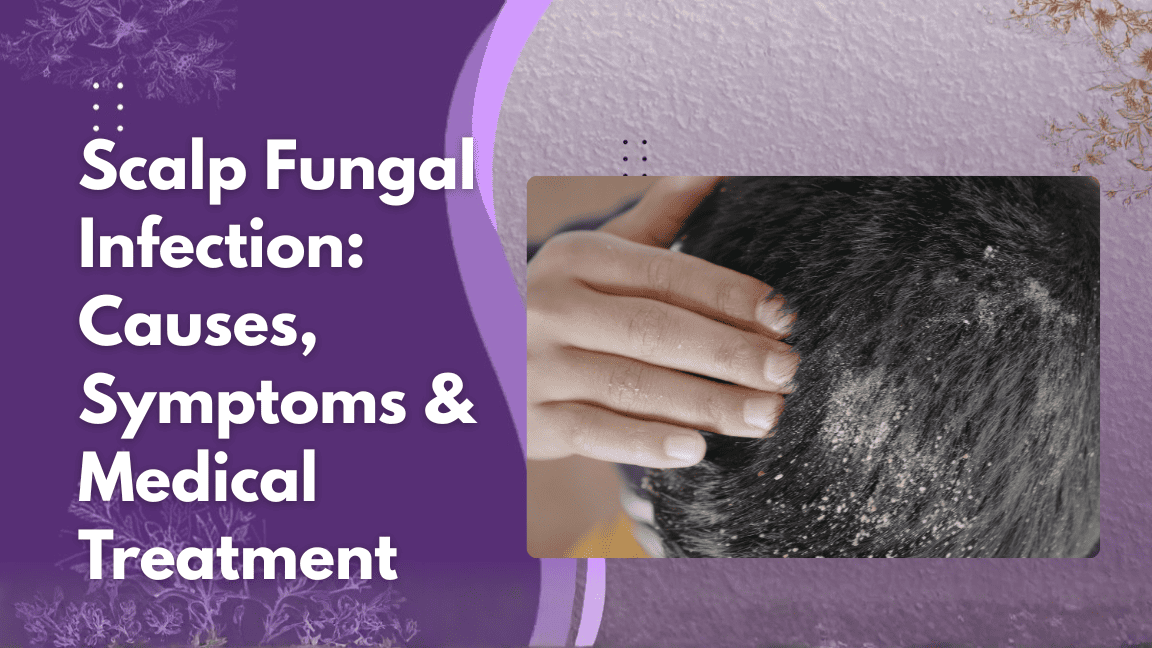
Introduction: When Itching Is More Than Just Dandruff
That persistent itch on your scalp. The white flakes that keep coming back no matter which shampoo you switch to. The bald patch that appeared suddenly and is slowly getting bigger. If any of these sound familiar, what you are dealing with may not be dandruff at all — it could be a scalp fungal infection.
A fungal infection on scalp is far more common in India than most people realise — and far more dangerous when left untreated. In a country with high humidity, warm temperatures, and densely shared grooming tools, scalp fungal infection spreads easily and silently — often dismissed as a simple dandruff problem until visible scalp fungal infection hair loss begins.
This medically reviewed guide — prepared by the dermatology team at WEA Cosmetic Clinic, Velachery, Chennai — covers the real scalp fungal infection causes, every warning sign you must not ignore, and the medical treatment for scalp fungal infection that dermatologists actually recommend. No home remedy myths — only clinical facts.
What Is a Scalp Fungal Infection?
Scalp fungal infection — medically known as tinea capitis or scalp ringworm — is a dermatophyte fungal infection of the scalp skin and hair shafts. Despite the name ‘ringworm’, no worm is involved. The infection is caused by a group of fungi called dermatophytes — specifically Trichophyton and Microsporum species — that feed on keratin, the protein that makes up the hair shaft and outer skin layer.
Unlike dandruff (seborrhoeic dermatitis), which is caused by a yeast called Malassezia and primarily affects the skin surface, fungal infection on scalp penetrates deeper — invading the hair follicle itself. This is why scalp fungal infection hair loss occurs: the fungus destroys the hair shaft from within, causing breakage, patches of missing hair, and in severe or untreated cases, permanent follicle scarring.
This is the most important distinction: dandruff does not cause hair loss. If you have scalp flaking combined with visible hair loss, patchy bald areas, or a tender, inflamed scalp — you need a dermatologist for scalp infection, not a new shampoo.
Scalp Fungal Infection Causes — Why It Happens in India
Understanding scalp fungal infection causes is the first step in both treating and preventing recurrence. In India, several environmental, social, and biological factors create ideal conditions for fungal infection on scalp to thrive.
- Direct Contact with an Infected Person
Dermatophytes spread through skin-to-skin contact. Sharing a bed, pillow, or close physical contact with someone who has scalp fungal infection is the most common transmission route — particularly in schools, hostels, and densely housed families.
- Sharing Contaminated Objects
Combs, hairbrushes, hats, towels, and helmets are common vehicles of transmission. In salons and barbershops that do not sterilise tools between clients, a single infected customer can spread fungal infection on scalp to multiple people. This is one of the most underappreciated scalp fungal infection causes in urban India.
- Sweat and Humidity — The Indian Climate Factor
Chennai and other South Indian cities maintain year-round humidity levels that create a near-perfect environment for dermatophyte growth. Sweat on the scalp, poor ventilation under hair, and prolonged moisture retention under helmets or tight caps are major scalp fungal infection causes in working professionals and students.
- Pets and Animals
Dogs, cats, and cattle commonly carry Microsporum canis — a dermatophyte species that causes scalp ringworm in humans. Children who handle animals frequently or sleep near pets are at significantly higher risk. This is a particularly common but overlooked scalp fungal infection causes in semi-urban households.
- Weakened Immune System
Patients with uncontrolled diabetes, HIV, those on chemotherapy, or those taking long-term corticosteroids have impaired immune function that allows fungal infection on scalp to take hold and spread more aggressively. In these patients, scalp fungal infection may present with more severe inflammation and carry a higher risk of permanent hair loss.
- Overcrowded Living Conditions
School dormitories, military barracks, and densely-occupied housing are environments where tinea capitis in adults India and in children spreads rapidly once introduced. The combination of shared spaces, shared objects, and high temperature makes fungal transmission almost inevitable without active hygiene measures.
Scalp Fungal Infection Symptoms — What to Look For
Scalp fungal infection symptoms range from mild itching with white flakes to severe inflammatory masses with fever and lymph node swelling. Knowing the full spectrum helps you identify the infection early — before scalp fungal infection hair loss becomes irreversible.
Early Warning Symptoms
- Persistent itchy scalp: An itchy scalp fungal infection typically causes a deeper, more intense itch than dandruff — one that does not fully resolve after washing.
- Circular scaly patches: Ringworm-pattern patches of scaling skin on the scalp — sometimes with a slightly raised edge and clearer centre. These patches may be one or multiple.
- White or grey flakes fixed to hair shafts: Unlike dandruff flakes that fall freely, scalp infection white flakes India caused by fungal infection often attach to the hair shaft and do not brush off easily.
- Hair breakage at scalp level: Hair shafts invaded by the fungus break off near the scalp surface, creating the characteristic ‘black dot’ appearance — small dark dots visible on the scalp where the hair has snapped.
Progressive and Severe Symptoms
- Patchy hair loss (alopecia): Scalp fungal infection hair loss appears as distinct oval or circular bald patches — different from male pattern baldness which follows a predictable frontal and crown pattern.
- Kerion formation: A kerion is a severely inflamed, boggy, pus-filled mass on the scalp — the immune system’s aggressive response to deep fungal invasion. It is tender, warm to touch, and may discharge pus. Kerion is a medical emergency — it requires urgent dermatologist evaluation as it can cause permanent scarring and scalp infection spreading hair loss.
- Swollen lymph nodes behind the ears or neck: Enlarged lymph nodes are a sign of immune system response to significant infection — present in more severe or longstanding cases of scalp fungal infection.
- Fever and generalised illness: In severe kerion cases or immunocompromised patients, systemic symptoms including low-grade fever and fatigue can accompany fungal infection on scalp.
DO NOT IGNORE THESE RED FLAGS
- Bald patches appearing without any prior hair loss pattern — see a dermatologist within days, not weeks
- A tender, swollen, pus-draining lump on the scalp — this is kerion and requires urgent treatment
- Scalp infection spreading beyond one area despite using antifungal shampoo for more than 4 weeks
- Any child with scalp itching and bald patches — tinea capitis is most common in children under 12.
Who Gets Scalp Fungal Infection? Risk Factors in India
While anyone can develop scalp fungal infection, certain groups carry significantly higher risk in the Indian context:
Medical Treatment for Scalp Fungal Infection — What Dermatologists Prescribe
Critical point: Scalp fungal infection treatment cannot be achieved with shampoo alone. Unlike body ringworm, which can sometimes respond to topical antifungal creams, fungal infection on scalp involves the hair follicle — a structure that topical products cannot adequately penetrate. Oral antifungal medication is almost always required for complete eradication. This is why self-treatment with antifungal shampoo for months without improvement is so common — the shampoo addresses the surface, not the infection.
- Oral Antifungal Medications (Primary Treatment)
The cornerstone of scalp fungal infection treatment India is systemic oral antifungal therapy. Dermatologists typically prescribe:
- Terbinafine (Lamisil): The most commonly prescribed first-line oral antifungal for tinea capitis treatment — typically given for 4–6 weeks. Highly effective against Trichophyton species, the most prevalent dermatophyte in India.
- Griseofulvin: Older but still effective, particularly against Microsporum species. Requires a longer course (6–8 weeks) and must be taken with fatty food for absorption. More commonly used in children.
- Itraconazole and Fluconazole: Second-line options used in resistant cases or when terbinafine is contraindicated. Pulse dosing protocols are sometimes used under dermatologist supervision.
- Antifungal Shampoo for Scalp India (Adjunct Treatment)
While antifungal shampoo for scalp India cannot cure the infection alone, it plays an important adjunct role in reducing fungal shedding — decreasing transmission risk to family members and other contacts. Dermatologist-recommended options include:
- Ketoconazole 2% shampoo: Used 2–3 times per week during the course of oral treatment. Reduces scalp fungal load and controls inflammation.
- Selenium sulphide 2.5% shampoo: Reduces spore shedding from the scalp. Particularly useful in household settings to reduce spread to other family members during treatment.
- Ciclopirox olamine shampoo: Broader antifungal spectrum. Useful in mixed infections or resistant presentations.
- Treatment of Kerion (Severe Inflammatory Form)
Kerion requires a modified treatment protocol. Oral antifungals remain the primary treatment, but oral corticosteroids (prednisolone) are often added for 1–2 weeks to reduce the severe inflammatory response — preventing permanent scarring of the follicle that would result in irreversible scalp fungal infection hair loss. Antibiotics may be co-prescribed if secondary bacterial infection is present.
- Treatment Duration and Follow-Up
The duration of scalp ringworm treatment India is non-negotiable — stopping medication early, even when symptoms improve, leads to relapse and drug-resistant fungal strains. Most dermatologists require treatment continuation for 2 weeks beyond clinical cure. Mycological cure (confirmed by scalp scraping or fungal culture) takes precedence over symptom resolution. Follow-up at 4 weeks and 8 weeks after starting treatment is standard at WEA Cosmetic Clinic.
How to Prevent Scalp Fungal Infection from Recurring
After completing scalp infection treatment, prevention is as important as cure. These evidence-based measures significantly reduce the risk of recurrence:
✔ Never share combs, brushes, hats, towels, or pillowcases with others — even family members
✔ Wash all personal hair accessories in hot water after completing treatment
✔ Keep the scalp dry — pat hair dry after washing, avoid prolonged damp scalp under caps or helmets
✔ Treat infected pets — animals carrying dermatophytes must receive veterinary antifungal treatment simultaneously
✔ Screen household contacts — family members, especially children, should be examined by a dermatologist if one person is diagnosed
✔ Use antifungal shampoo preventively if you regularly use shared salon or gym facilities — once weekly as maintenance
✔ Control diabetes and manage any underlying immune conditions with your physician
When to See a Dermatologist — and Why WEA Clinic
Self-treating a scalp fungal infection with over-the-counter shampoos is one of the most common reasons the condition escalates to kerion, permanent hair loss, or chronic recurrent infection. If you are experiencing any of the scalp fungal infection symptoms described in this guide — particularly bald patches, black dots, or a painful swollen scalp lump — see a dermatologist for scalp infection Chennai without delay.
At WEA Cosmetic Clinic, our dermatologist Dr. Vatsan V (MD Dermatology) provides accurate diagnosis of scalp fungal infection using clinical examination and, where needed, scalp scraping for mycological confirmation. The correct medical treatment for scalp fungal infection is prescribed from the first appointment — including the appropriate oral antifungal regimen, adjunct shampoo protocol, and follow-up schedule tailored to your specific case.
Do not wait for the infection to spread or the hair loss to worsen. The earlier the scalp fungal infection treatment chennai begins, the higher the chance of complete recovery with full hair regrowth.
Conclusion:
Scalp fungal infection is a medically serious condition that is frequently misdiagnosed as dandruff — leading to months of ineffective treatment while the infection deepens, spreads, and causes potentially permanent scalp fungal infection hair loss. The scalp fungal infection causes are well understood. The scalp fungal infection symptoms are recognisable when you know what to look for. And the medical treatment for scalp fungal infection — oral antifungals prescribed by a qualified dermatologist — is highly effective when started early.
If you have been treating your scalp with antifungal shampoo for more than 4 weeks without significant improvement, stop the shampoo-only approach and book a dermatologist consultation. Scalp ringworm treatment India requires a prescription — and only a dermatologist can give you one. Visit WEA Cosmetic Clinic, Velachery, Chennai today — open all days, 10 AM to 8 PM, with no prior appointment needed for initial consultations.
FAQs
1. What are the symptoms of scalp fungal infection?
Scalp fungal infection symptoms include persistent itching, circular scaly patches on the scalp, white or grey flakes attached to the hair shaft, hair breakage at scalp level leaving black dots, and patchy hair loss. In severe cases, a painful swollen pus-filled mass called kerion can develop. Unlike dandruff, scalp fungal infection always causes some degree of hair loss in the affected patches.
2. What causes scalp fungal infection?
Scalp fungal infection causes includes direct contact with an infected person, sharing contaminated combs, brushes or towels, unsterilised salon tools, contact with infected pets, and the warm humid climate that promotes fungal growth. Weakened immunity from diabetes or other conditions significantly increases risk. Overcrowded living conditions and poor scalp hygiene after sweating under helmets are also major causes.
3. Can scalp fungal infection cause permanent hair loss?
Yes — scalp fungal infection can cause permanent hair loss if left untreated or inadequately treated. The fungus invades and destroys the hair follicle, and if severe inflammation (kerion) develops and scars the follicle, regrowth may not occur in that area. However, when scalp fungal infection treatment is started early with appropriate oral antifungal medication, full hair regrowth is possible in most cases.
4. What is the best treatment for scalp fungal infection in chennai?
The best medical treatment for scalp fungal infection in chennai is oral antifungal medication — typically terbinafine or griseofulvin — prescribed by a dermatologist for 4–8 weeks. Antifungal shampoo (ketoconazole or selenium sulphide) is used as an adjunct to reduce fungal shedding but cannot cure the infection alone. Self-treating with shampoo only is the most common reason scalp fungal infections persist and worsen.
5. How long does scalp fungal infection treatment take?
Scalp fungal infection treatment typically takes 4–8 weeks of continuous oral antifungal medication. Symptoms may improve within 2 weeks but treatment must continue for the full prescribed course to prevent relapse. Most dermatologists recommend continuation for 2 weeks beyond clinical cure and confirm mycological clearance through follow-up examination. Stopping treatment early — even when the scalp looks normal — is the primary cause of recurrence.