


Skin is more than something we associate with appearance or confidence. It acts as the body’s outer protective barrier, helping defend us from environmental exposure, irritants and everyday physical stress. Understanding how your skin behaves is an important first step in choosing a skincare routine that actually suits you.
Your skin can change throughout life. Hormones, genetics, age, climate, medications and daily skincare habits can all influence how it looks and feels. Some concerns may run in families, while others develop because of environmental or lifestyle factors. The right routine can help manage many of these concerns, although persistent skin problems may need professional assessment.
So, do you really need to understand your skin before choosing skincare products?
Yes.
Knowing your skin type gives you a useful starting point for choosing products and building a routine that suits your skin rather than simply following someone else’s regimen.

Written and medically reviewed by Dr. Vatsan V, MBBS, MD – Dermatology, Venereology & Leprosy
Dermatologist at WEA Clinic, Chennai
Dr. Vatsan V provides dermatological assessment and personalised guidance for a range of skin concerns. Rather than recommending the same skincare routine for everyone, the approach focuses on understanding an individual’s skin type, concerns, sensitivity and overall skin condition before suggesting appropriate skincare or treatment.
This article is intended for general educational purposes and should not replace an individual consultation with a qualified dermatologist.
What Are the Different Skin Types?
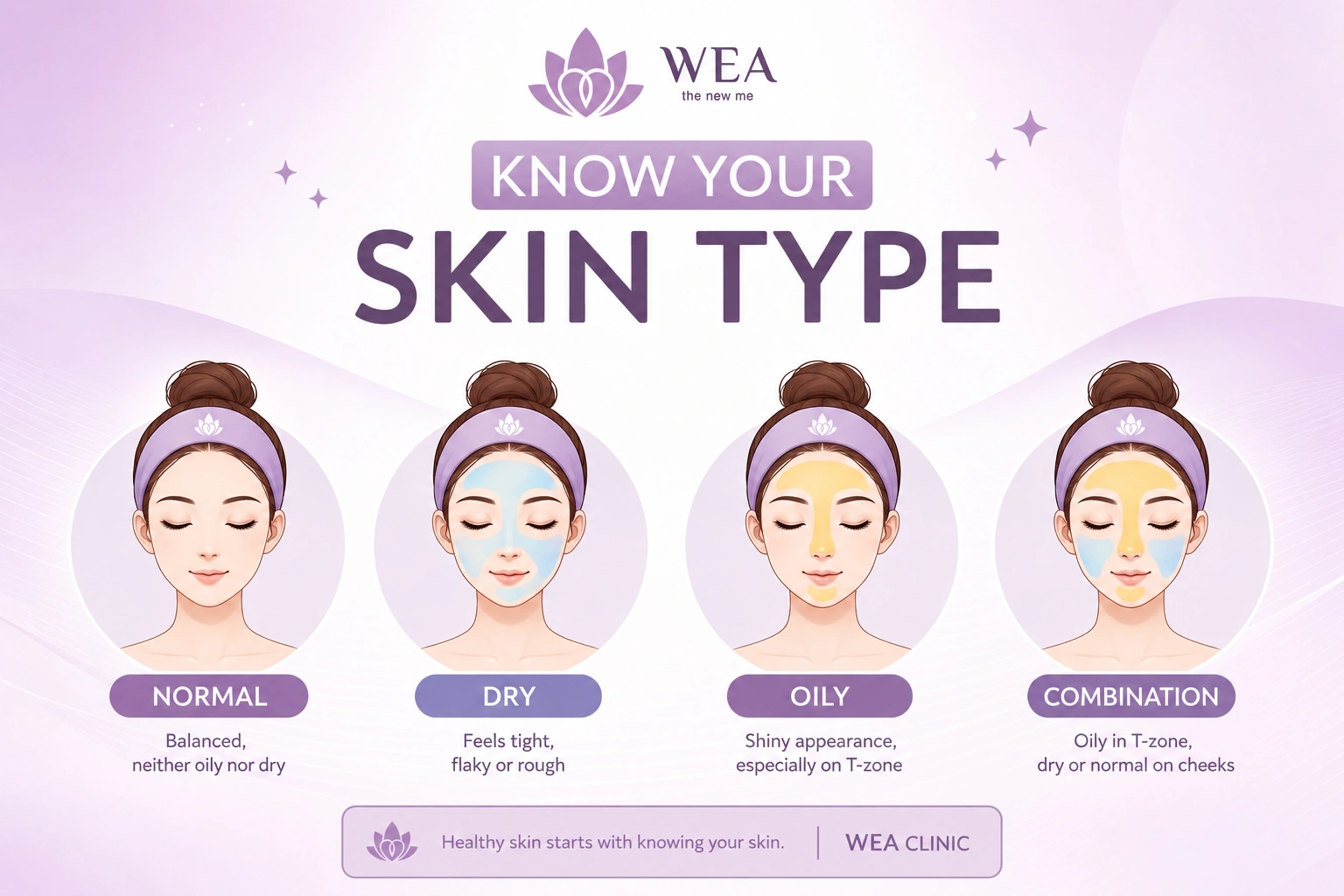
Skin is commonly described as dry, oily, combination or normal based mainly on how much oil it produces and how it feels.
Sensitive skin is slightly different. Rather than being a separate skin type, sensitivity describes how easily skin reacts to products, environmental conditions or other triggers. A person can therefore have oily and sensitive skin, or dry and sensitive skin.
Let’s look at the characteristics of each type and how you can identify them.
Why Is It Important to Identify Your Skin Type?
If your routine isn’t improving the concerns you started it for, the problem may not be that you need more products. The products may simply not suit your skin’s needs.
Knowing whether your skin tends to be oily, dry, combination or normal gives you a better starting point when choosing cleansers, moisturisers and other skincare products.
Knowing your skin type can help you:
- Choose more suitable skincare products
- Avoid unnecessary irritation
- Build a simpler daily routine
- Understand why certain products may not suit you
- Manage common concerns more effectively
- Adjust your routine when your skin changes
The 4 Common Skin Types
1. Dry Skin
Dry skin tends to lack sufficient natural oils and lipids to maintain a comfortable, well-protected skin barrier.
Characteristics:
The skin may feel tight, rough, flaky or uncomfortable, particularly after cleansing or bathing. Some people may also experience mild itching or visible scaling.
Who may experience it:
Dry skin can affect anyone, but it may become more noticeable with age, cold or dry weather, frequent washing, hot showers and the use of irritating skincare products.
Why does dry skin occur?
Dry skin occurs when the skin does not have enough natural oils and lipids to maintain its protective barrier. Water can then escape more easily from the skin, contributing to dryness and roughness.
What does dry skin need?
A gentle cleanser, regular moisturisation and products that support the skin barrier.
2. Oily Skin
Oily skin develops when the sebaceous glands produce more sebum than the skin needs.
Characteristics:
The face may appear shiny or greasy, particularly around the forehead, nose and chin. Some people with oily skin may also experience enlarged-looking pores, blackheads or acne.
Who may experience it:
Oily skin can occur at any age and may be influenced by genetics, hormones, climate and certain medications. Hormonal changes can increase sebum production in some people, making oiliness and acne more noticeable.
Why does oily skin occur?
The sebaceous glands produce sebum to lubricate and protect the skin. When excess sebum is produced, it can make the face look greasy and may contribute to clogged pores and acne.
What does oily skin need?
Gentle cleansing, lightweight moisturisation and appropriate sun protection. If you experience persistent acne or clogged pores, additional treatment may be needed.
3. Normal Skin
Normal skin generally has a balanced level of oil and hydration.
Characteristics:
It tends to feel comfortable after cleansing, with relatively little dryness, excessive oiliness or sensitivity. The skin may have a relatively even texture and tone.
Why does normal skin occur?
Normal skin reflects a relatively balanced relationship between oil production, hydration and the skin barrier. However, even normally balanced skin can change with age, climate, hormones and skincare habits.
What does normal skin need?
A simple routine focused on gentle cleansing, appropriate moisturisation and daily sun protection.
4. Combination Skin
Combination skin occurs when different areas of the face behave differently.
Characteristics:
The forehead, nose and chin may produce more oil, while the cheeks remain normal or feel dry. This difference between facial areas is one of the most common signs of combination skin.
Why does combination skin occur?
Genetics, hormones, climate and skincare habits can all influence how much oil different areas of the face produce. Seasonal changes can also make the difference between oily and dry areas more noticeable.
What does combination skin need?
Combination skin often benefits from a balanced routine. Lightweight products may feel more comfortable over oilier areas, while drier areas may need additional moisturisation.
What Is Sensitive Skin?
Sensitive skin tends to react more easily than other skin.
Common symptoms include burning, stinging, itching, redness, tightness or discomfort after using certain products or being exposed to environmental triggers.
Fragrance, harsh cleansers, certain active ingredients, heat, weather changes and other environmental factors may trigger symptoms in sensitive skin.
Persistent rashes, swelling, blisters or hives should not automatically be attributed to sensitive skin. These symptoms may have another cause and should be assessed by a dermatologist when persistent or severe.
Sensitive skin can occur alongside any of the other skin types. For example, you can have dry and sensitive skin or oily and sensitive skin.
How to Identify Your Skin Type at Home
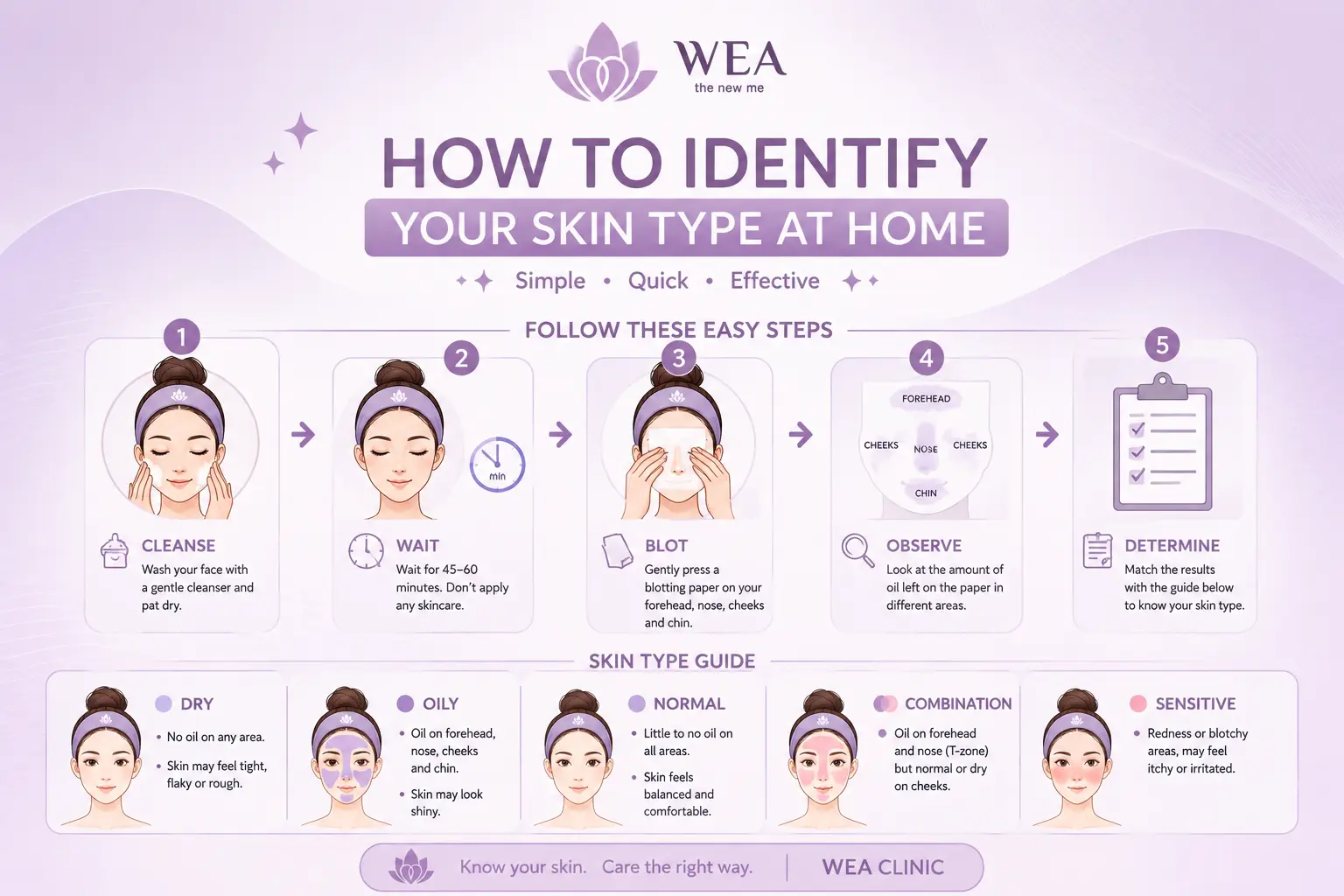
You don’t necessarily need a complicated test to get a basic idea of your skin type.
Two simple approaches are the bare-face method and the blotting sheet method.
1. Bare-Face Method
This is one of the simplest ways to observe how your skin behaves naturally.
- Wash your face with a gentle cleanser.
- Pat your skin dry without rubbing.
- Do not apply skincare products immediately.
- Allow your skin to settle for around 30–60 minutes.
- Observe how your skin feels and where oiliness or dryness develops.
You may notice the following:
- Dry skin: Your face feels tight, rough or flaky.
- Oily skin: Most areas of the face become noticeably shiny or greasy.
- Combination skin: The T-zone becomes oily while the cheeks remain normal or feel dry.
- Normal skin: Your skin feels comfortable with minimal dryness or excessive oiliness.
2. Blotting Sheet Method
A blotting sheet can provide another indication of your skin’s oil production.
- Cleanse your face gently.
- Wait around 30–60 minutes.
- Press a clean blotting sheet gently against different areas of your face.
- Check where oil appears on the sheet.
If there is noticeable oil across most areas of the face, your skin may be oily. If oil is concentrated mainly around the forehead, nose and chin, you may have combination skin.
If very little oil appears and your skin feels comfortable, your skin may be normal. If your skin feels tight, rough or flaky, dryness may be a more prominent concern.
Can a Home Skin-Type Test Give a Definite Answer?
Not always.
A home test can give you a useful indication, but skin behaviour can change depending on the season, climate, hormones, medications and skincare products.
If your skin is persistently irritated, breaking out, excessively dry or oily, or developing unusual changes, a dermatologist can help determine what is actually causing the problem.
Can Your Skin Type Change?
Yes.
Your skin type isn’t necessarily fixed forever. Age, hormones, weather, medications, stress and skincare products can change how your skin behaves.
For example, someone with naturally oily skin may experience dryness after using an overly harsh acne treatment, while combination skin may become drier during colder or less humid weather.
Reassessing your skin from time to time can help you adjust your routine without constantly changing products.
Skincare Routine Based on Your Skin Type
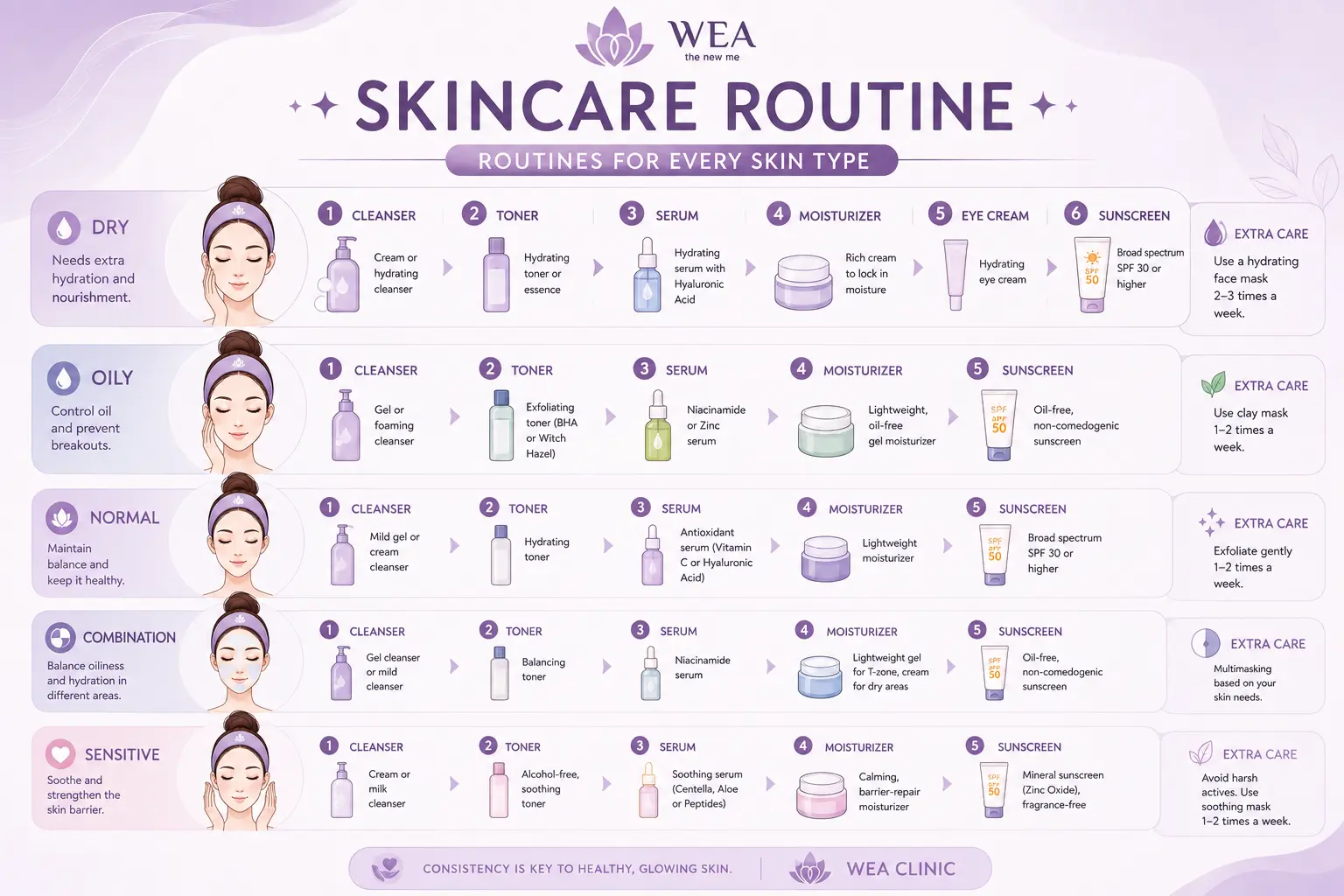
Regardless of skin type, the foundation of a basic skincare routine remains similar:
Cleanse → Moisturise → Protect
The products, textures and additional ingredients can vary depending on your skin and individual concerns.
1. Skincare Routine for Dry Skin
Morning
- Use a gentle, non-stripping cleanser.
- Apply a moisturiser containing ingredients such as ceramides or glycerin.
- Finish with broad-spectrum sunscreen of SPF 30 or higher.
Evening
- Cleanse gently to remove sunscreen, makeup and impurities.
- Apply a moisturiser while the skin is comfortable and slightly hydrated.
- A richer moisturiser may be useful if your skin feels particularly dry.
Do’s and Don’ts
- Choose fragrance-free products if your skin is easily irritated.
- Moisturise regularly, especially after cleansing.
- Use lukewarm rather than hot water.
- Keep showers reasonably short.
- Avoid harsh scrubbing and products that leave the skin feeling tight.
- Consider a humidifier if the surrounding air is particularly dry.
2. Skincare Routine for Oily Skin
Morning
- Cleanse gently.
- Apply a lightweight, non-comedogenic moisturiser.
- Use broad-spectrum sunscreen of SPF 30 or higher.
Evening
- Cleanse to remove sunscreen, makeup, excess oil and impurities.
- Use treatment products only when appropriate for your specific concerns.
- Finish with a suitable lightweight moisturiser.
If your skin needs exfoliation, a suitable chemical exfoliant may be considered based on your skin condition and tolerance.
Do’s and Don’ts
- Choose lightweight, non-comedogenic products.
- Blotting papers can be used to temporarily reduce surface oil during the day.
- Avoid repeatedly washing your face.
- Avoid aggressive physical scrubbing.
- Do not pick blackheads or pimples.
- Remember that oily skin still needs moisturisation.
3. Skincare Routine for Normal Skin
Normal skin generally doesn’t require a complicated routine.
Morning
- Cleanse gently.
- Apply moisturiser if needed.
- Use broad-spectrum sunscreen of SPF 30 or higher.
Evening
- Cleanse away sunscreen, makeup and daily impurities.
- Apply a suitable moisturiser.
Targeted ingredients can be introduced when there is a specific concern, such as pigmentation, acne or early signs of ageing.
Do’s and Don’ts
- Keep your routine consistent.
- Avoid unnecessary active ingredients.
- Don’t change products constantly.
- Avoid harsh cleansers and excessive exfoliation.
- Protect your skin from UV exposure every day.
4. Skincare Routine for Combination Skin
Combination skin often benefits from a balanced approach rather than treating the entire face as oily or dry.
Morning
- Cleanse the whole face gently when needed.
- Apply a lightweight moisturiser.
- Use broad-spectrum sunscreen of SPF 30 or higher.
Evening
- Cleanse to remove sunscreen, makeup, sweat and excess oil.
- Use targeted products only where appropriate.
- Apply a lightweight moisturiser, adding a richer layer to particularly dry areas if necessary.
Do’s and Don’ts
- Use different product textures when necessary.
- Avoid over-cleansing dry areas.
- Don’t skip moisturiser because some areas of your face are oily.
- Avoid aggressive exfoliation.
- Adjust the routine according to seasonal changes rather than constantly replacing products.
5. Skincare Routine for Sensitive Skin
Sensitive skin usually benefits from a simple routine with fewer potential irritants.
Morning
- Choose a gentle, fragrance-free cleanser that does not leave your skin feeling tight.
- Apply a simple moisturiser suited to your skin.
- Use a broad-spectrum SPF 30 or higher sunscreen that your skin tolerates comfortably.
Evening
- Cleanse gently.
- Apply a fragrance-free moisturiser.
- Avoid introducing several new products at the same time.
Do’s and Don’ts
- Patch-test new products when appropriate.
- Avoid heavily fragranced skincare if it triggers irritation.
- Be cautious with strong exfoliants and active ingredients.
- Avoid prolonged hot showers.
- Stop using a product if it consistently causes burning, swelling or significant irritation.
- Seek professional advice if sensitivity is persistent or severe.
Which Skincare Ingredients Are Used for Different Concerns?
Different ingredients serve different purposes. More ingredients do not necessarily mean better results.
Glycolic Acid
An alpha hydroxy acid that exfoliates the skin surface and can help improve uneven texture, dullness and the appearance of some pigmentation.
Niacinamide
A form of vitamin B3 that can support the skin barrier, help regulate excess oil and reduce the appearance of inflammation and uneven tone.
Vitamin C
An antioxidant that can help protect against oxidative stress and improve the appearance of pigmentation when used as part of an appropriate skincare routine. It does not replace sunscreen.
Salicylic Acid
A beta hydroxy acid that can penetrate into pores and help remove excess oil and debris. It is commonly used for oily and acne-prone skin.
Hyaluronic Acid
A humectant that helps attract and retain water, making it useful in moisturising products for different skin types.
Glycerin
A humectant that helps draw water into the outer layers of the skin and supports hydration.
Ceramides
Lipids that help support the skin barrier and reduce moisture loss. They are particularly useful in moisturisers for dry or barrier-impaired skin.
Petrolatum
An occlusive ingredient that forms a protective layer over the skin and helps reduce water loss. It can be useful for very dry areas.
Aloe Vera
A soothing ingredient found in many skincare products. Its suitability depends on the formulation and individual skin sensitivity.
Benzoyl Peroxide
An acne treatment that helps reduce acne-causing bacteria and inflammation. It is commonly used for inflammatory acne and should be introduced according to individual skin tolerance.
Common Mistakes When Choosing Skincare for Your Skin Type
Knowing your skin type is useful, but there are several common mistakes that can still cause problems.
Using Too Many Products
Adding several active ingredients at once can increase irritation and make it difficult to determine which product is helping or causing a reaction.
Treating Oily Skin by Over-Cleansing
Repeated washing or aggressive scrubbing can irritate the skin without addressing the reason for excess sebum.
Skipping Moisturiser
Oily and combination skin still need hydration. The key is choosing a suitable texture rather than avoiding moisturiser completely.
Changing Products Too Frequently
Give a routine enough time to assess how your skin responds unless a product causes irritation or another adverse reaction.
Ignoring Sunscreen
UV exposure can contribute to pigmentation, premature ageing and worsening of several skin concerns. Daily sun protection should be part of most skincare routines.
When Should You See a Dermatologist?
A dermatologist can be helpful when you are unsure about your skin type or when your concerns continue despite a consistent routine.
Consider professional assessment if you have:
- Persistent acne or frequent breakouts
- Painful or inflamed pimples
- Significant pigmentation or melasma
- Persistent redness or irritation
- Severe dryness or peeling
- Recurrent rashes
- Unusual changes in skin colour or texture
- A skincare reaction that does not settle
A dermatologist can assess your skin rather than relying only on its appearance and recommend products or treatments based on the underlying concern.
Why Choose WEA Clinic for Skin Care in Chennai?
Understanding your skin type is an important starting point, but skin concerns are not always limited to whether your skin is oily, dry or combination. Persistent acne, excessive oiliness, pigmentation, sensitivity, clogged pores or irritation may require a more detailed assessment.
At WEA Clinic, Chennai, skin concerns are evaluated based on the individual’s skin condition and specific needs. Under the guidance of Dr. Vatsan V, Dermatologist, the focus is on identifying the factors affecting your skin before recommending a suitable skincare approach or treatment.
At WEA Clinic, skin care focuses on:
- Understanding your skin type and current skin condition
- Assessing concerns such as acne, pigmentation, excessive oiliness and sensitivity
- Avoiding unnecessary products or treatments
- Recommending skincare based on individual needs
- Providing dermatologist-guided treatment when professional care is required
Whether you are unsure about your skin type or dealing with a persistent skin concern, a professional assessment can help you move beyond trial-and-error skincare and choose an approach that is more suitable for your skin.
Key Takeaways
- Skin is commonly described as dry, oily, combination or normal.
- Sensitive skin is better understood as a characteristic of reactive skin rather than a separate skin type.
- A simple bare-face or blotting-sheet test can give you an initial idea of your skin type.
- Your skin can change with age, hormones, climate, medications and skincare habits.
- Every skin type benefits from gentle cleansing, appropriate moisturisation and daily sun protection.
- Oily skin does not mean you should avoid moisturiser or repeatedly wash your face.
- Dry and sensitive skin generally benefit from a simple, barrier-supporting routine.
- If persistent acne, pigmentation, irritation or unusual skin changes continue, professional assessment may be appropriate.
Frequently Asked Questions
1. Does my diet or lifestyle affect my skin?
Diet and lifestyle can influence overall skin health, and some people may notice that certain dietary patterns affect their acne. However, acne has several causes and cannot usually be prevented simply by avoiding oily foods. Staying hydrated, getting adequate sleep and following a balanced diet are sensible parts of overall skin care.
2. What does non-comedogenic mean?
A non-comedogenic product is formulated to reduce the likelihood of clogging pores. These products can be useful for people who are prone to blackheads or acne, although individual reactions can still vary.
3. Is skincare necessary for everyone?
A complicated skincare routine isn’t necessary for everyone. However, basic care such as gentle cleansing, moisturisation when needed and daily sun protection can help maintain the skin barrier and protect against environmental damage.
4. Do I need to apply sunscreen every day?
Daily sunscreen helps protect the skin from UV radiation, which can contribute to pigmentation, premature ageing and other forms of sun damage. Consistent use can also help prevent existing pigmentation from becoming darker.
5. Is cleansing important for every skin type?
Yes. Cleansing helps remove excess oil, sweat, sunscreen, makeup and environmental impurities. However, the cleanser should match your skin’s needs and should not leave the skin excessively dry or tight.
6. Can I have oily and sensitive skin at the same time?
Yes. Skin oiliness and sensitivity describe different aspects of the skin. Someone can have oily skin that is also sensitive or easily irritated.
7. Can my skin type change over time?
Yes. Age, hormones, climate, medications, stress and skincare products can all affect how your skin behaves. It is normal for your skin to feel different at different stages of life.
Conclusion
Understanding your skin type is a useful starting point for building a skincare routine, but it is not about putting yourself into a permanent category. Skin can change with age, hormones, weather, medications and the products you use.
Start with the basics: cleanse gently, moisturise appropriately and protect your skin from UV exposure. From there, choose targeted ingredients only when you have a specific concern to address.
If you are dealing with persistent acne, pigmentation, sensitivity, excessive oiliness, dryness or another skin concern, a dermatologist can help identify what your skin actually needs rather than relying entirely on an at-home skin type test.