


Oily skin occurs when the sebaceous glands produce excess sebum, making the face appear shiny or greasy and potentially contributing to clogged pores and breakouts. Oily skin can usually be managed with a consistent skincare routine, appropriate ingredients, hydration and sun protection. The key is to control excess oil without stripping or damaging the skin barrier.
 This guide is written by Dr. Vatsan Vivekanandan, MBBS, MD – Dermatology, Venereology & Leprosy, with experience in diagnosing and managing dermatological concerns. The recommendations are based on dermatology principles and focus on practical ways to manage excess oil while supporting the skin barrier.
How to Check if I Have Oily Skin
Simple tests can be performed at home to check whether you have oily skin.
- Bare-faced test: Wash your face with a gentle cleanser, pat dry and leave it for 30 minutes. Do not apply anything to the face. Check for greasiness or shine after 30 minutes. If your skin feels greasy or appears shiny, then you have oily skin.
- Blotting paper test: After washing your face with a gentle cleanser, press your face with blotting paper after 30 minutes. If it is soaked up with more oil, then your skin is oily.
Science Behind Oily Skin
If you want to know how to control oil on your face, you need to learn about sebum and its relation to oily skin. Excess oil on face can occur when the sebaceous glands produce more sebum than the skin needs. Sebum is an oily and waxy substance that protects our skin and is produced by sebaceous glands. Sebum is made up of fatty acids, cholesterol, wax, glycerides and squalene. Sebum protects our skin by moisturising it and forming a coat. When sebum production increases, it can cause clogging of pores, which can lead to oily skin and acne. Below are some conditions that the overproduction of sebum can cause:
- Acne: Formation of pimples on the chest, face, shoulders, or upper back.
- Sebaceous cysts: These are the fluid-filled lumps that are formed when sebaceous glands are damaged.
- Hyperplasia: Bumps are formed on the skin due to enlargement of sebaceous glands. These are benign and do not require any treatment.
- Sebaceous filaments: These are the hair-like structures formed on the face, especially the T-zone.
What are the Signs of Oily Skin?
Apart from feeling oily, you can identify oily skin by its appearance. The sebum production follows a pattern because it is produced more in specific regions, which include the face, scalp, upper chest and back. Sebum is not produced in regions like the palm and soles of the feet. The characteristics that identify oily skin are:
- Shiny appearance: Greasy or oily appearance, mainly in the T-zone.
- Acne and blemishes: Acne and blemishes are the result of oily skin. Blemishes appear red, inflamed and also painful. It can appear at any spot on the face.
- Enlarged pores: If the pores are visible to the naked eye and appear enlarged, then you have oily skin.
- Makeup breakdown: Oily skin often experiences makeup breakdown. This results in a patchy or uneven appearance.
- Absorption: Skin care products’ absorption is low.
- Clogged pores: When sebum production is higher, it leads to the clogging of pores.
- Blackheads and whiteheads: Blackheads are formed when pores are clogged and exposed to air. Whiteheads are formed when the pores are clogged and stay closed.
What Triggers Oily Skin
There are several factors that can cause oily skin and worsen it. Oily skin is the result of genetics, climate, age, enlarged pores and skincare products which are not suitable for oily skin. Below are the causes of oily skin:
- Genetics: If your parents have oily skin, then you may inherit it.
- Age: While ageing, skin loses collagen, which is a protein; along with this, the activity of sebaceous glands decreases. But the Thai process slows down for people with oily skin.
- Hormones: Fluctuation of hormones like androgen can affect sebum production, causing oily skin.
- Diet: Foods high in glycaemic content can cause more sebum production. E.g., carbohydrates and sugars
- Place: People living in humid climates face oily skin. In summers, more oil can be observed on skin compared to winters.
- Enlarged pores: Ageing or weight shifts can enlarge the pores, resulting in more oil production.
- Skin care products: Heavy creams and heavy moisturisers should not be used on oily skin; they, in turn, worsen the condition.
How to Control Oily Skin
Now you have an idea, but do you know how to reduce oily skin? Here are some ways to control oily skin:
- Washing your face is important. Wash your face twice a day to remove the excess oil, dirt or bacteria to avoid infection. Also wash your face after exercising or when you feel sweaty.
- Do not scrub hard on your face, because whenever you scrub hard, your face becomes irritated. When irritated, more oil is produced.
- Avoid using harsh chemical products on your face. Because harsh chemicals not only dry out your face but also produce more oil. Instead, use a mild moisturiser or a cleanser.
- Use a toner after cleansing. Toner can smoothen and hydrate your skin.
- Drink enough water to hydrate your skin.
- Use products that are light and non-oily.
- Follow a balanced diet. Include a lot of fruits, vegetables and grains in your diet.
- Do not touch your face. Touching your face often can transfer the oil and bacteria, leading to clogged pores and infections.
- Use blotting paper regularly to remove the excess oil on your face.
- Use a sunscreen to avoid damage to skin from UV rays.
Skincare Routine for Oily Skin
Oily skin treatment becomes difficult when we are not aware of the products to be used. The oily skin care routine covers everything you need to do from the morning until the night. Following a consistent routine is one of the most effective ways to learn how to reduce oil on face and keep the skin balanced throughout the day.
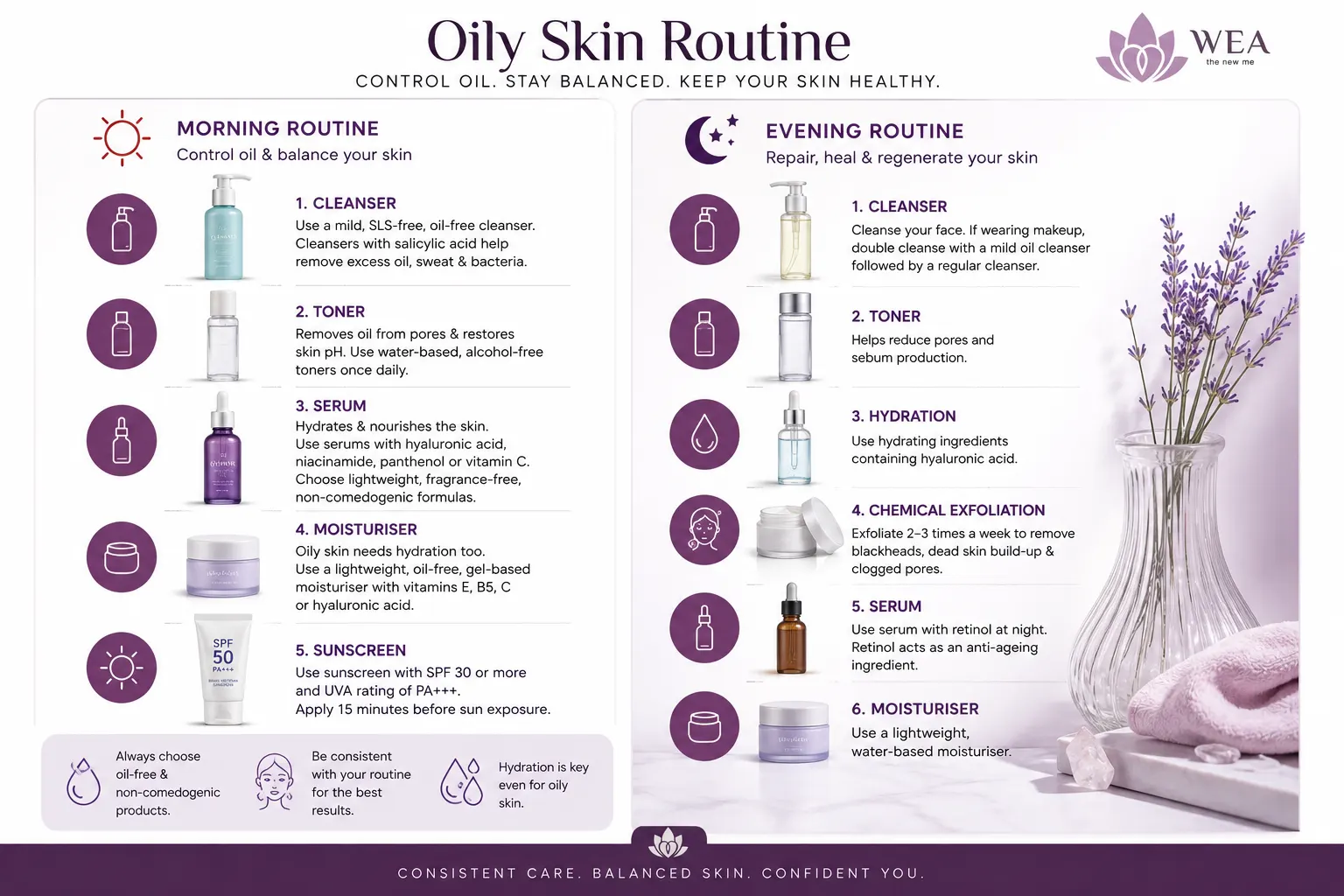
Morning routine:
The morning routine includes controlling the oil and balancing the skin.
- Cleanser: It removes excess oil, sweat and bacteria that are responsible for breakouts. Use a mild, SLS-free and oil-free cleanser. Use cleansers with salicylic acid.
- Toner: Toner can remove the oil in the pores and restore the pH of skin. Use it once daily; it can be in the morning or in the evening. Water-based and alcohol-free toners will be perfect for your skin.
- Serum: Serum provides hydration to the skin. Serums with hyaluronic acid, panthenol, niacinamide and vitamin C could be used. Make sure that the serum is free from fragrance, lightweight and is non-comedogenic.
- Moisturiser: Even though oily skin feels moist, it needs moisturisation to avoid dehydration. Use a lightweight, oil-free, gel-based moisturiser. The product should contain ingredients like vitamins E, B5, C and hyaluronic acid.
- Sunscreen: Use a sunscreen with SPF 30 or more with a UVA rating of PA+++ to protect the skin from sun damage. Make sure you apply sunscreen 15 minutes before exposing yourself to the sun.
Evening routine:
The evening routine is necessary for the skin to repair, heal and regenerate.
- Cleanser: Use a cleanser to cleanse your face. If makeup is applied, then double cleansing can be done using a mild oil cleanser and followed by a regular cleanser.
- Toner: Toner can reduce pores and sebum production.
- Hydration: Use a hydrating ingredient containing hyaluronic acid.
- Chemical exfoliation: Chemical exfoliation should be done two to three times a week. It removes blackheads, cell build-up and clogged pores.
- Serum: Serum with retinol can be applied at night. Retinol acts as an anti-ageing ingredient.
- Moisturiser: Use a lightweight and water-based moisturiser.
Ingredients That Work for You
- Niacinamide: It is a form of vitamin B3. It controls excess oil production by reducing shine and balancing skin.
- Salicylic acid: It acts as an exfoliator and reduces blackheads and discolouration caused by bacteria.
- Clay: Clay controls oil production by absorbing excess oil. Kaolin, green, bentonite and rhassoul are the clay types that can be effective.
- Hyaluronic acid: It retains the moisture without clogging any pores.
- Zinc: Acts as an anti-inflammatory. Suitable for people dealing with acne.
- Alpha Hydroxy Acids (AHAs): It includes ingredients like lactic acid and glycollic acid, which exfoliates the skin.
- Tea tree oil: It reduces acne and controls oil production.
- Retinol: It acts as an anti-ageing agent by reducing clogged pores and breakouts.
- Aloe vera: For soothing and hydrating the skin.
- Glycollic acid: Exfoliates the skin.
Note: Always perform a patch test if you are using new products and new ingredients.
What to Avoid
- Heavy and oily moisturisers: They are greasy, thick and clog the pores.
- Scrubs: Harsh exfoliants can be avoided. Because it can irritate the skin and produce more oil.
- Alcohol-based products: They remove the moisture and can dry out the skin for a certain period, but it can result in more oil production.
- Fragrances: Any type of fragrance can cause skin irritation and inflammation, leading to breakouts.
- Sulphates: These are mostly found in the cleansers. It removes the natural oil while producing more oil later.
- Comedogenic substances: The ingredients that clog pores and lead to breakouts are called comedogenic. Petrolatum, lanolin, coconut oil, some forms of shea butter, myristic acid and isopropyl myristate are some ingredients.
- Cream-based sunscreens: They are heavy and oily.
When Should You See a Dermatologist for Oily Skin?
You should consider seeing a dermatologist for oily skin if persistent oiliness is accompanied by frequent breakouts, painful or inflamed acne, stubborn blackheads or clogged pores, skin irritation, or if your current skincare routine isn’t improving the problem. A dermatologist can assess your skin to determine whether the oiliness is associated with acne or another underlying skin concern and recommend an appropriate treatment approach.
Consider a dermatology consultation if you have:
- Persistent excessive facial oiliness
- Frequent or recurring acne breakouts
- Painful or inflamed pimples
- Persistent blackheads or clogged pores
- Skin irritation after using skincare products
- Oily skin that isn’t improving despite a consistent routine
- Uncertainty about which products or ingredients are appropriate for your skin
This is better than simply saying “see a dermatologist if you have oily skin.“ A dermatologist is a medical doctor specializing in diagnosing skin, hair and nail conditions, so the section should explain when professional assessment adds value.
Oily Skin Care at WEA Clinic, Chennai
Managing oily skin isn’t simply about removing as much oil as possible. At WEA Clinic, Chennai, dermatological care focuses on understanding your skin, identifying factors contributing to excess oil, and choosing an appropriate approach based on your individual concerns.
Dr. Vatsan V, MBBS,
MD – Dermatology,
Venereology & Leprology,
provides dermatological evaluation and guidance for skin concerns, including oily and acne-prone skin. Depending on the individual’s skin condition, a dermatologist may recommend suitable skincare, prescription options or in-clinic treatments where appropriate.
If persistent oiliness, clogged pores or recurring breakouts continue despite a consistent skincare routine, a dermatologist consultation at WEA Clinic can help determine the appropriate next step.
Key Takeaways
- Skin produces sebum that provides moisture for skin. When more sebum is produced, it can lead to oily skin.
- Oily skin is characterised by the appearance of oil in the T-zone. Other characteristics include clogged pores, enlarged pores, acne, whiteheads and blackheads.
- Factors like genetics, age, climate, place and diet can induce oily skin.
- By following a skincare routine, oil can be controlled. It includes use of products like moisturiser, cleanser, sunscreen and toner.
- Harsh chemicals and exfoliators can be harmful to oily skin and cause an over-buildup of oil. It is better to avoid such ingredients.
Frequently Asked Questions
1. What is oily skin?
Oily skin is the result of overproduction of oil. It can be caused due to genetic factors, age, climate and diet.
2. How to reduce oil on the face?
Oil can be reduced by frequently removing it with blotting paper and cleansers.
3. How to manage oily skin?
Oily skin can be managed by following a healthy diet and avoiding harsh exfoliators, chemical peels or any harmful substance. Make use of gentle cleansers.
4.How to stop oily skin?
Oil skin cannot be stopped or eradicated. It can be managed by following a proper skincare routine.
5. Can moisturiser be avoided?
Using a moisturiser is beneficial for oily skin, as even oily skin becomes dehydrated. Use lightweight moisturisers.