

It feels like a never-ending job, right? The cycle of shaving, waxing, and dealing with unwanted hair. You get smooth skin for a day or two, and then, like clockwork, the stubble comes back. It can be frustrating. It can be time-consuming. And it can be expensive.
You have probably stood in a store aisle, staring at a wall of razors, creams, and waxing kits, and just felt lost. Shaving is fast, but it leaves bumps. Waxing lasts longer, but wow, does it hurt. And what about all those fancy laser treatments you see online?
If you are tired of the guesswork and just want a straight answer about what actually works, you are in the right place. This guide is here to cut through all the noise. We are going to talk about the different methods, who they are best for, and what a real doctor would recommend. No confusing talk. Just a simple, honest look at how to get the smooth skin you want.
Which hair removal method is best for female dermatologists recommended?
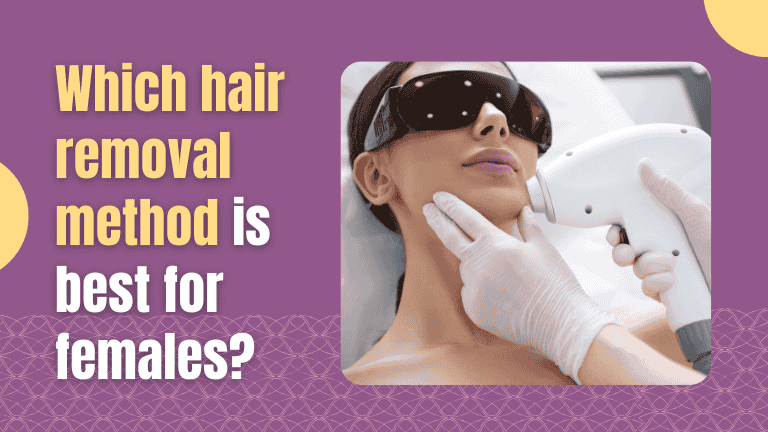
Let’s get right to it. If you walk into a skin clinic and ask a doctor for the best long-term solution, they will almost always give you the same answer: Laser Hair Removal.
Why? Because it is the only method that gets to the root of the problem.
Think of it like this. Shaving is like cutting the grass. It looks nice for a day, but you know it is growing right back. Waxing is like pulling a weed out, but if you leave a tiny bit of the root behind, it just pops up again.
A professional laser treatment is like getting to the root and telling it to stop growing. Simple as that.
- It Gets to the Root: The laser sends a beam of light that the dark pigment in your hair soaks up. This light zaps the hair follicle, the little root where the hair grows from. A zapped root just can’t grow hair very well anymore.
- It is Super Precise: The laser is smart. It can target the dark hair and leave your skin completely alone.
- The Results Stick Around: It is not a one-time thing. But after a few sessions, you will see a huge, permanent drop in how much hair grows back.
So, which hair removal method is best for a female dermatologist recommended? For a real, long-term fix, all the experts point to laser.
Which hair removal method is safest?
This is a big one. The “best” method means nothing if it is not safe. The truth is, every method has little risks, but some are much safer than others.
Let’s look at the options.
- Shaving: Seems safe, right? But we have all been there. The little nicks, the cuts, and those awful red razor bumps and ingrown hairs. It can really make your skin angry.
- Hair Removal Creams: Those smelly creams use strong chemicals to melt the hair. If your skin is even a little bit sensitive, you could end up with redness or a burn.
- Waxing: Waxing can be great, but if the wax is too hot, ouch! Burns. It can also pull off a little bit of skin, which is not fun. And it is a big cause of ingrown hairs.
So, which hair removal method is safest? When you go to a real pro in a clean clinic, laser hair removal is the safest choice by far.
Why? Because a trained dermatologist knows skin inside and out. They use the right settings for you. The horror stories you hear usually come from people using cheap at-home gadgets or going to places without trained staff. In the hands of a real expert, it is incredibly safe.
What is best for hair removal at home?
Sometimes, you just need a quick, easy fix at home. A trip to the clinic is not always on the cards. In the world of do-it-yourself hair removal, you have a few main choices.
So, what is best for hair removal at home? It really depends on what you value most: speed, cost, or how long the results last.
- For Speed and Ease: Shaving There is no denying it. Shaving is the fastest and easiest way to get smooth skin. It is cheap, you can do it in the shower, and it is painless (as long as you do not cut yourself). The big downside? The hair comes back. Fast. Usually within a day or two.
- For Longer-Lasting Results: Waxing or Epilating At-home waxing strips and epilators (little devices that pull hair out from the root) will give you a few weeks of smoothness. The downside is the pain. It can be pretty uncomfortable, especially the first few times. It also takes a bit more time and can be messy.
- A Note on At-Home Laser Devices: You might see these online. While they seem tempting, they are much, much weaker than the professional machines in a doctor’s clinic. They might be able to slow down hair growth a little, but they will not give you the same permanent results. And if used incorrectly, they can still be risky.
For a quick fix, shaving is the winner. For longer results at home, waxing or epilating is the way to go, if you can handle the sting.
What is the longest lasting hair removal method?
If your main goal is to spend less time thinking about hair removal, then this is the question for you. You want the method that gives you the most bang for your buck, time-wise.
So, what is the longest lasting hair removal method? There is a clear winner here, and it is not even close.
It is Laser Hair Reduction.
Let’s compare.
- Shaving: Your results last for about 1 to 3 days.
- Waxing: Your results last for about 3 to 6 weeks.
- Laser Hair Removal or Reduction: After you finish your series of treatments, your results are a permanent reduction in hair.
What does that mean? It means that for most people, about 80-90% of the hair in the treated area is gone. For good. The few hairs that might grow back over the years are usually much finer, lighter, and barely noticeable. Some people like to get a single touch-up session once a year or so, but the days of constant maintenance are over. It is the only method that offers a truly long-term solution.
Best hair removal method for women private parts
This is a sensitive area. Both literally and figuratively. The skin here is delicate, and it is prone to getting irritated. That means choosing the right hair removal method is extra important.
So, what is the best hair removal method for women private parts?
For this area, the goal is to get smooth skin without all the painful side effects, like razor bumps and ingrown hairs.
- The Pro-Choice: Laser Hair Reduction Most dermatologists would agree that laser is the best option for the bikini area. Why? Because it is the best way to prevent ingrown hairs. By damaging the follicle, you are not just removing the hair; you are stopping the cycle that leads to those painful, angry red bumps. It also gives you a permanent solution, so you do not have to constantly irritate the sensitive skin with razors or wax.
- The Common Alternative: Waxing A professional bikini wax can give you great, smooth results for a few weeks. A good aesthetician will be quick and use the right kind of wax to minimize pain and irritation. It is a solid choice if you are not ready for laser.
- The Quick Fix: Shaving Shaving is fast, but it is also the biggest cause of razor burn and ingrown hairs in this area. If you are going to shave, always use a sharp, clean razor, lots of shaving cream, and shave in the direction the hair grows.
For a long-term, irritation-free solution, laser is the top choice.
How to stop hair growth on body permanently
This is the ultimate dream for many. To just be done with unwanted hair. Forever. But is it actually possible?
So, how to stop hair growth on body permanently? The honest answer is that completely stopping all hair growth forever is not really something we can do. Our bodies are very good at repairing themselves, and things like hormonal changes can sometimes wake up new hair follicles.
But we can get incredibly close.
The only method that offers permanent hair reduction is Laser Hair Removal. As we talked about before, after a full course of treatments, the vast majority of hair follicles in that area will be permanently disabled. They will not grow hair again.
This is the closest thing science has given us to a permanent solution. It is a life-changing treatment for people who are tired of the daily or weekly battle with unwanted hair.
Dos and don’ts of hair removal
No matter which method you choose, there are a few golden rules that will help you get better results and keep your skin happy and healthy.
The DOs:
- DO exfoliate regularly. A couple of days before you remove hair, gently exfoliate the area. This helps to remove dead skin cells and can prevent ingrown hairs.
- DO moisturize every day. Keeping your skin soft and hydrated makes any hair removal process easier and helps your skin recover faster.
- DO follow the aftercare advice. If you get a professional treatment like a wax or laser, listen to the expert! They will tell you what to do to keep your skin safe and get the best results.
The DON’Ts:
- DON’T tan before a laser treatment. Laser works by targeting the dark pigment in your hair. If your skin is tanned, the laser can get confused and target your skin instead, which is not safe.
- DON’T shave or wax irritated skin. If you have a cut, a rash, or a sunburn, just wait. Let your skin heal first.
- DON’T use harsh products right after. After hair removal, your skin is a little sensitive. Avoid things with a lot of fragrance or alcohol for a day or so.
Conclusion
So, what is the final word? Shaving is fast. Waxing lasts longer. But if you are looking for a long-term, safe, and effective solution, the answer is clear. Professional laser hair reduction is the best choice for most women.
It is an investment. It is not in money, but in your time and your confidence. It is the freedom to wear what you want, when you want, without a second thought. It is the end of razor bumps and painful waxing sessions.
You do not have to figure this all out on your own. The best first step you can take is to have a simple chat with a doctor. A dermatologist can look at your skin and hair type, listen to your goals, and help you build a plan that is perfect for you. It is the first step to getting the smooth, carefree skin you want.
FAQ’s
- Does hair grow back thicker after shaving?
This is a huge myth. No, it does not. When you shave, you are cutting the hair at its thickest point. So, as it grows out, it just feels thicker for a little while. Shaving does not change the actual color or thickness of your hair.
- Is laser hair removal painful?
Most people say it is not very painful at all. They often describe the feeling as a quick snap, like a rubber band against the skin. Modern laser machines have cooling features that make the process very comfortable.
- Why do I get red bumps after shaving or waxing?
Those annoying red bumps are usually either razor burn, which is skin irritation, or ingrown hairs. An ingrown hair is a hair that curls back and grows into the skin, causing a red, pimple-like bump.
- Can I get laser hair removal if I have light-colored hair?
This can be tricky. Laser works by targeting the dark pigment (melanin) in the hair. If your hair is very light blonde, white, or gray, there is not enough pigment for the laser to “see.” It is usually not effective for very light hair.
- How much does laser hair removal cost?
The cost depends on a few things, like the size of the area you are treating (underarms will cost less than full legs), the city you live in, and the clinic you choose. Most clinics offer packages for a series of sessions, which almost always saves you money.
Also Read: What is the Best Female Hair Growth Treatment? Explains PRP vs. GFC