

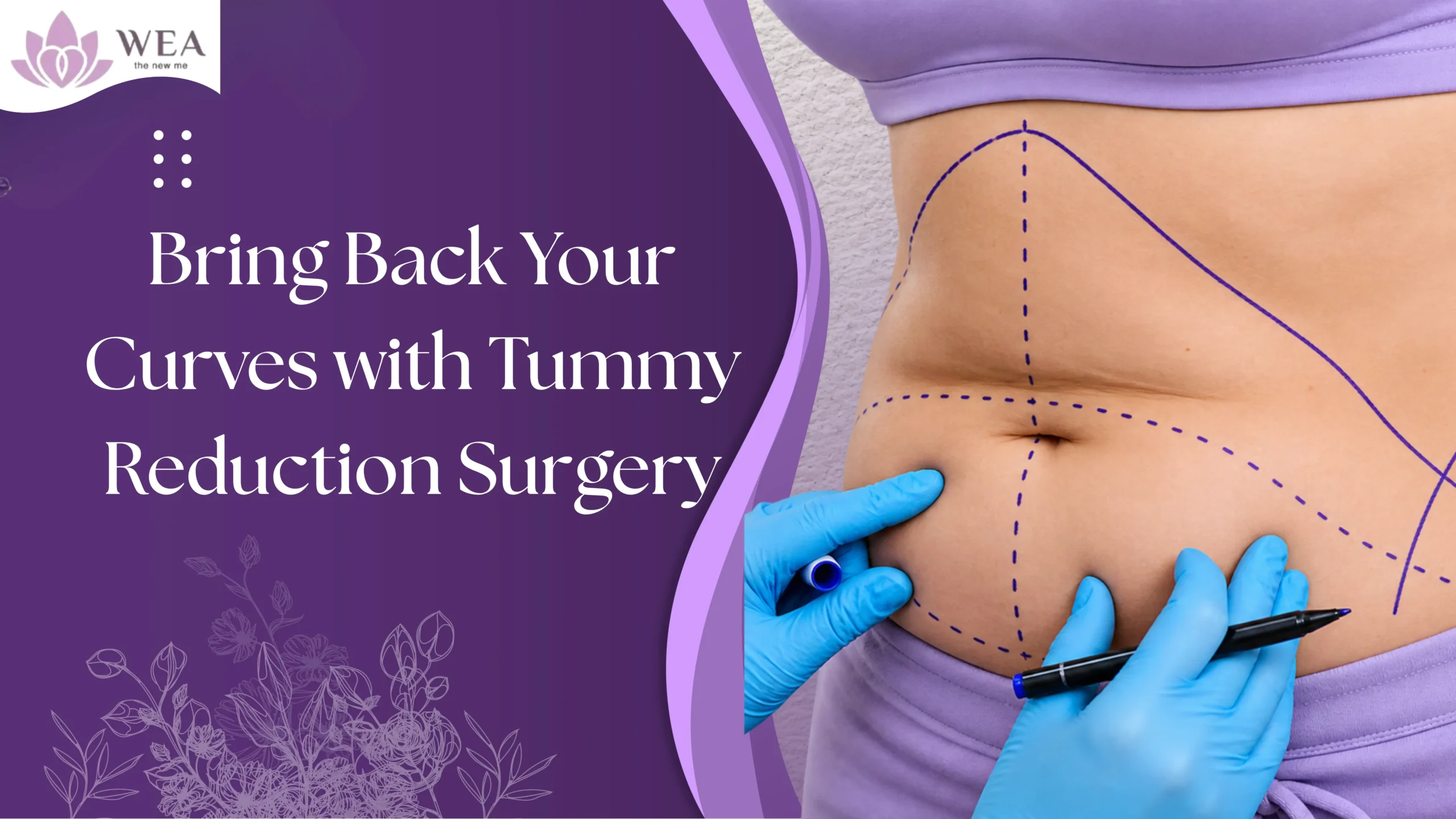
What Is Tummy Reduction Surgery?
Quick Answer: Tummy reduction surgery in Chennai, also known as abdominoplasty or tummy tuck surgery, can remove excess abdominal skin and may tighten weakened abdominal muscles to create a firmer, smoother abdominal contour. It may be considered after pregnancy, significant weight loss or major changes in abdominal skin and muscle tone when loose skin or abdominal laxity persists despite lifestyle changes. It is not a weight-loss procedure, and the appropriate treatment plan is decided after assessment by a qualified plastic surgeon.
It is commonly considered after pregnancy, significant weight loss, ageing or major changes in abdominal skin and muscle tone when loose skin or abdominal laxity does not improve sufficiently with diet and exercise.
A tummy tuck is not a weight-loss procedure. It is designed to reshape the abdomen after your weight is relatively stable. Liposuction may sometimes be combined with abdominoplasty when localised fat also needs to be addressed.
At WEA Clinic, Velachery, tummy tuck consultations are led by qualified plastic surgeons, including Dr. Aishwarya V. L (MBBS, MS, MCh), Plastic, Breast & Cosmetic Surgeon. Your anatomy, concerns, expectations and overall health are assessed before deciding whether tummy tuck surgery is appropriate for you.
WEA Clinic at a Glance



⭐ 4.8 Google Rating
Patient-rated experience
1000+ Procedures
Clinical experience across procedures
Experienced Plastic Surgeon
Surgical care planned according to your individual anatomy and goals
Personalised Treatment Plans
Procedure and recovery guidance based on your individual needs
Individual Assessment Before Surgery
Treatment suitability assessed according to your anatomy, concerns and health
Recovery & Aftercare Guidance
Post-surgery care and expected recovery explained before treatment
What Is Tummy Tuck Surgery?
A tummy tuck, medically known as abdominoplasty, is a plastic surgery procedure used to improve the shape and firmness of the abdomen.
Depending on the patient’s anatomy, the procedure may address:
- Excess or loose abdominal skin
- Localised abdominal fat
- Weak or separated abdominal muscles
- Abdominal changes after pregnancy
- Loose skin after significant weight loss
- Changes in abdominal contour associated with ageing
During surgery, the surgeon removes an appropriate amount of excess skin and may tighten the underlying abdominal wall where clinically appropriate. The remaining skin is repositioned to create a smoother abdominal contour.
Liposuction may also be used in selected patients to improve contour, but liposuction and tummy tuck address different problems.
Tummy Tuck After Pregnancy or Weight Loss
Pregnancy and significant weight changes can stretch the abdominal skin and alter the abdominal wall.Some people find that even after returning to a stable weight, they still have:
- Loose skin around the lower abdomen
- A stretched or protruding abdominal appearance
- Abdominal muscle laxity
- Skin that does not respond to exercise
- Localised fat along with excess skin
A tummy tuck may address these changes when appropriate.
If you are planning another pregnancy or significant weight loss, it is important to discuss this with your plastic surgeon before deciding on surgery because future changes can affect the result.
Who May Consider Tummy Tuck Surgery?
There is no single body type or exact age that automatically makes someone suitable for abdominoplasty.
A plastic surgeon generally considers:
- Your overall health
- Weight stability
- Skin quality and amount of excess skin
- Abdominal muscle condition
- Previous abdominal surgeries
- Smoking or nicotine use
- Existing medical conditions
- Current medications
- Future pregnancy plans
- Your expectations from surgery
You may be considered for tummy tuck surgery if you have persistent loose abdominal skin or abdominal laxity despite maintaining a relatively stable weight.
The final decision should always follow an individual medical assessment.
Types of Tummy Tuck Surgery
The type of abdominoplasty depends on the amount and location of excess skin and the condition of the abdominal wall.
1. Mini Tummy Tuck
A mini tummy tuck generally addresses a more limited amount of excess skin, particularly in the lower abdomen.
It may be considered when:
- Excess skin is mainly below the belly button
- The required correction is relatively limited
- The abdominal area does not require the extent of correction associated with a full tummy tuck
The incision and surgical approach vary according to individual anatomy.
2. Full Tummy Tuck
A full tummy tuck addresses a larger portion of the abdomen.
It may involve:
- Removal of excess abdominal skin
- Tightening of weakened abdominal muscles when required
- Repositioning of the belly button
- Contouring of the abdominal area
This is often considered when there is more extensive skin laxity following pregnancy or significant weight loss.
3. Extended Tummy Tuck
An extended tummy tuck uses a longer incision and may address excess skin extending towards the sides of the waist or hips.
It can be considered when the loose skin extends beyond the central abdomen.
4. Fleur-de-Lis Tummy Tuck
A fleur-de-lis technique uses both horizontal and vertical components of skin removal.
It may be considered for selected patients with substantial excess skin in different directions, particularly after significant weight loss.
Your surgeon will determine the appropriate technique after examining your abdomen rather than selecting a procedure based only on the amount of fat present.
Tummy Tuck vs Liposuction: What’s the Difference?
These procedures are often confused, but they are designed to solve different problems.
| Tummy TuckLiposuction | |
|---|---|
| Removes excess skin | Removes localised fat |
| Can tighten weakened abdominal muscles | Does not tighten abdominal muscles |
| Addresses significant skin laxity | Works best when skin elasticity is adequate |
| Involves larger incisions | Usually uses smaller access points |
| Recovery is generally longer | Recovery is generally shorter |
Some patients may benefit from a combination of tummy tuck and liposuction, but this depends on their anatomy, goals and overall surgical plan.
How Is Tummy Tuck Surgery Performed?
The exact surgical technique differs from one patient to another.
Step 1: Consultation and Assessment
Your plastic surgeon evaluates:
- Abdominal skin
- Excess tissue
- Muscle laxity
- Previous surgical scars
- Overall health
- Weight stability
- Your goals and expectations
Step 2: Surgical Planning
The surgeon decides which type of tummy tuck is appropriate and discusses the expected incision, scar position, recovery and possible need for additional procedures.
Step 3: Anaesthesia
Tummy tuck surgery is generally performed under general anaesthesia.
Step 4: Incision and Skin Removal
An incision is made in the lower abdomen. The length depends on the technique and the amount of skin requiring removal.
Step 5: Abdominal Wall Repair
If abdominal muscle separation or weakness is present and suitable for surgical correction, the abdominal wall may be tightened as part of the procedure.
Step 6: Belly Button Repositioning
During a full tummy tuck, the belly button may need to be repositioned through a new opening in the abdominal skin.
Step 7: Closure and Postoperative Care
The incision is closed and drains may be used temporarily when necessary to manage fluid accumulation.
After surgery, you will be monitored and given specific instructions for pain control, wound care, movement and follow-up.
What Should You Do Before Tummy Tuck Surgery?
Preparation depends on your health and surgical plan.
Before surgery, tell your surgeon about:
- Prescription medicines
- Over-the-counter medicines
- Vitamins and supplements
- Previous surgeries
- Existing medical conditions
- Allergies
- Smoking or nicotine use
- Plans for future pregnancy
Your surgeon may recommend changes to certain medicines or supplements before surgery. Do not stop prescribed medication on your own.
Smoking and nicotine can interfere with wound healing, so your surgeon may require you to stop before and after surgery for a specified period.
It is also useful to arrange:
- Transport home after surgery
- Someone to assist you during the initial recovery period
- Comfortable clothing
- Help with household tasks
- Time away from physically demanding work
Is There an Age Limit for Tummy Tuck Surgery?
There is no single age at which tummy tuck surgery automatically becomes appropriate or inappropriate.
Suitability depends more on:
- General health
- Medical conditions
- Weight stability
- Skin and abdominal muscle condition
- Smoking status
- Surgical risk
- Expectations
Older adults may still be candidates if they are medically suitable, while younger patients may also need to postpone surgery depending on pregnancy plans or ongoing weight changes.
Your surgeon should assess your individual situation rather than using age alone.
What Are the Benefits of Abdominoplasty?
The potential benefits depend on your starting anatomy and the procedure performed.
Tummy tuck surgery may:
- Remove excess abdominal skin
- Improve abdominal contour
- Create a firmer-looking abdomen
- Tighten weakened abdominal muscles when appropriate
- Improve the appearance of loose skin after pregnancy or weight loss
- Improve body proportions and contour
A tummy tuck may also address some abdominal muscle separation in selected patients.
However, it is important not to treat abdominoplasty as a solution for general weight loss or as a guarantee of a specific body shape.
Tummy Tuck Surgery Risks and Possible Complications
Abdominoplasty is major surgery, so understanding the risks is an important part of the decision.
Possible complications include:
- Bleeding
- Infection
- Seroma or fluid accumulation
- Poor wound healing
- Visible or widened scarring
- Changes in skin sensation or numbness
- Persistent swelling
- Asymmetry
- Skin or tissue damage
- Blood clots
- Anaesthesia-related complications
- Persistent pain
- Need for revision surgery in some cases
Your individual risk can depend on your health, smoking status, previous surgery, the extent of the procedure and other factors.
A detailed consultation helps you understand which risks are particularly relevant to you.
What Is Tummy Tuck Recovery Like?
Tummy tuck recovery is gradual, and the exact timeline varies from patient to patient.
First Week
You may experience:
- Swelling
- Bruising
- Soreness
- Tightness around the abdomen
- Limited movement
Your surgeon will explain how to move, sleep, care for the incision and manage discomfort.
Gentle walking may be encouraged, while heavy lifting and strenuous activity are generally restricted.
Weeks 2–3
As healing progresses:
- Swelling gradually reduces
- Daily movement becomes easier
- Light activities may be resumed according to medical advice
- The incision continues to heal
Your return to work depends on your occupation and individual recovery.
Weeks 4–6
Many patients gradually return to more normal activities during this period, but strenuous exercise and heavy lifting should only resume when the surgeon gives clearance.
Following Months
Swelling can continue to settle for several months.
The abdominal contour becomes clearer as healing progresses, while the surgical scar continues to mature.
A scar can continue changing and fading for a year or longer.
Your surgeon’s individual recovery instructions should take priority over any general timeline.
Tummy Tuck Results: What Can You Expect?
Tummy tuck surgery can create a flatter and firmer-looking abdominal contour by addressing excess skin and, when appropriate, abdominal muscle laxity.
Results are not visible in their final form immediately because swelling and healing can affect the appearance of the abdomen.
Over the following months:
- Swelling gradually decreases
- The abdominal contour becomes clearer
- The incision and scar mature
- Final results become easier to assess
Results can be long-lasting, particularly when body weight remains relatively stable. However, ageing, major weight changes and future pregnancy can alter the abdominal contour.
Does a Tummy Tuck Remove Belly Fat?
A tummy tuck is not primarily a fat-removal procedure.
Its main purpose is to remove excess skin and improve abdominal contour, with muscle tightening when appropriate.
Liposuction may be added in selected patients to remove localised fat deposits and improve contour.
If your main concern is excess fat with relatively good skin elasticity, liposuction may be considered instead of a tummy tuck.
A consultation is needed to determine which approach fits your anatomy.
How Much Does Tummy Tuck Surgery Cost in Chennai?
Tummy tuck surgery cost in Chennai varies from patient to patient because there is no single procedure or fixed surgical plan.
The final cost can depend on:
- Type of tummy tuck
- Amount of excess skin
- Surgical complexity
- Surgeon’s fees
- Anaesthesia
- Hospital or surgical facility charges
- Preoperative investigations
- Medications
- Postoperative care
- Whether liposuction or another procedure is combined with abdominoplasty
- Length of hospital stay, when applicable
A quoted price should therefore be understood as part of an individual treatment plan rather than a universal tummy tuck price.
At WEA Clinic, the expected treatment approach, recovery and associated costs can be discussed during your consultation.
Avoid choosing a tummy tuck based only on the lowest advertised price. The surgical plan, qualified surgeon, clinical setting and follow-up care are equally important considerations.
Is Tummy Tuck Surgery Permanent?
A tummy tuck removes the excess skin treated during surgery and can produce long-lasting changes to abdominal contour.
However, the result does not make the abdomen immune to future changes.
Significant:
- Weight gain or weight loss
- Pregnancy
- Ageing
- Changes in body composition
can affect the appearance of the abdomen over time.
Maintaining a stable weight and following your surgeon’s advice can help preserve the result.
Can Tummy Tuck Surgery Be Combined With Liposuction?
Yes, lipoabdominoplasty, which combines liposuction with abdominoplasty, may be appropriate for selected patients.
The combination can address both:
- Excess abdominal skin
- Localised fat deposits
However, combining procedures can change the surgical plan, risks, recovery and cost.
Your surgeon should determine whether combining the procedures is appropriate for your anatomy and health.
Can Men Have Tummy Tuck Surgery?
Yes.
Tummy tuck surgery is not limited to women.
Men may consider abdominoplasty when they have:
- Excess abdominal skin after significant weight loss
- Persistent loose skin
- Abdominal contour concerns
- Muscle laxity in selected cases
The technique is planned according to the individual’s anatomy and goals.
When Should You Consider a Tummy Tuck Consultation?
A consultation may be worth considering if you have:
- Persistent loose abdominal skin
- Abdominal changes after pregnancy
- Excess skin following significant weight loss
- Abdominal muscle laxity
- A stable weight but ongoing concern about abdominal contour
- Questions about tummy tuck versus liposuction
A consultation is also useful if you are unsure whether surgery is actually necessary.
The purpose of the consultation is not simply to decide on surgery. It is to understand what is causing the abdominal appearance, which options are available and what each option can realistically achieve.
Why Choose WEA Clinic for Tummy Tuck Surgery in Chennai?
Choosing a clinic for cosmetic surgery involves more than comparing treatment prices.
At WEA Clinic, Velachery, plastic surgery consultations include assessment of your concerns, anatomy, expectations and suitability before a procedure is recommended.


The plastic surgery team includes Dr. Aishwarya V. L (MBBS, MS, MCh), Plastic, Breast & Cosmetic Surgeon.
The consultation process focuses on:
- Understanding your individual concern
- Assessing abdominal skin and tissue
- Discussing suitable surgical options
- Explaining expected results
- Discussing recovery and possible risks
- Providing information about the expected treatment cost
The appropriate procedure depends on the individual rather than a one-size-fits-all approach.
Tummy Tuck Surgery in Chennai: Key Takeaways
- Tummy tuck surgery, or abdominoplasty, is a body-contouring procedure — not a weight-loss treatment.
- It can remove excess abdominal skin and may tighten weakened abdominal muscles.
- Pregnancy and significant weight loss are common reasons people consider the procedure.
- Mini, full, extended and fleur-de-lis techniques are selected according to individual anatomy.
- Liposuction and tummy tuck address different concerns and may sometimes be combined.
- Recovery is gradual, with strenuous activity restricted during the healing period.
- Scarring is expected, although scars generally mature and fade over time.
- The cost depends on the surgical technique, complexity, facility, anaesthesia and additional procedures.
- A plastic surgeon should assess your health, anatomy and expectations before surgery.
Frequently Asked Questions About Tummy Tuck Surgery
1. Is tummy tuck surgery a weight-loss procedure?
No. A tummy tuck is primarily a body-contouring procedure. It removes excess skin and may tighten abdominal muscles. It should not replace weight-loss treatment.
2. Can a tummy tuck flatten the stomach?
A tummy tuck can create a flatter-looking abdominal contour by removing excess skin and addressing abdominal muscle laxity when appropriate. The result depends on your anatomy and the surgical technique used.
3. Does a tummy tuck remove belly fat?
A tummy tuck is mainly designed to address excess skin and abdominal contour. Liposuction may be used for selected areas of localised fat when appropriate.
4. What is the difference between tummy tuck and liposuction?
Liposuction primarily removes localised fat. A tummy tuck removes excess skin and can tighten weakened abdominal muscles. Some patients may need one procedure, while others may benefit from a combination.
5. How long does tummy tuck recovery take?
Recovery varies according to the procedure and the individual. Many patients gradually return to normal activities over several weeks, while strenuous exercise and heavy lifting may need to be restricted for longer. Your surgeon will provide a personalised recovery timeline.
6. Does tummy tuck surgery leave a scar?
Yes. A tummy tuck requires an incision and therefore leaves a scar. The scar’s length and appearance depend on the surgical technique and amount of skin removed. It generally matures and fades over time but does not disappear completely.
7. How long do tummy tuck results last?
The results can be long-lasting, particularly when your weight remains stable. Significant weight changes, ageing and pregnancy can affect the result.
8. Can men undergo tummy tuck surgery?
Yes. Men can undergo abdominoplasty when they have suitable concerns such as excess abdominal skin or selected cases of abdominal laxity.
9. Can I have a tummy tuck after pregnancy?
Yes, pregnancy is one reason people may consider abdominoplasty. If you are planning another pregnancy, discuss your plans with your plastic surgeon because another pregnancy can alter the result.
10. Is tummy tuck surgery safe?
Tummy tuck surgery is a major operation and, like any surgery, carries risks. These include bleeding, infection, fluid accumulation, wound-healing problems, scarring, blood clots, sensation changes and anaesthesia-related complications. Your surgeon should explain the risks relevant to your individual health.
11. When should I consult a plastic surgeon?
Consider a consultation if you have persistent loose abdominal skin, changes after pregnancy or significant weight loss, abdominal muscle laxity, or uncertainty about whether tummy tuck, liposuction or another option is appropriate.
Book a Tummy Tuck Consultation in Chennai
If loose abdominal skin or changes after pregnancy or weight loss continue to concern you despite maintaining a stable weight, a personalised assessment can help you understand your options.
At WEA Clinic, Velachery, the plastic surgery team can assess your abdominal condition, discuss suitable treatment approaches and explain the expected recovery, results and cost before you make a decision.
Consult a qualified plastic surgeon to determine whether tummy tuck surgery is appropriate for you.
Written By
WEA Clinic Editorial Team
Medically Reviewed By
Dr. Aishwarya V. L — Plastic Surgeon, WEA Clinic, Velachery
Medical disclaimer: This article is intended for general educational purposes and should not replace an individual consultation with a qualified medical professional. Suitability for tummy reduction surgery depends on your medical history, abdominal anatomy, current health, treatment goals and clinical assessment by a qualified plastic surgeon.

